ADT confirmed a data breach on April 24, 2026, after the ShinyHunters extortion group listed the home security provider on their data leak site, threatening to publish stolen data if a ransom wasn't paid by April 27. This incident, reportedly stemming from a vishing attack that compromised an employee's Okta SSO account, mirrors a similar 2023 breach, raising serious questions about ADT's identity and access management posture.
What Happened
ADT detected unauthorized access to customer and prospective customer data on April 20, 2026. The company acted quickly, terminating the intrusion and initiating a forensic investigation with third-party cybersecurity experts. Law enforcement was notified of the incident, as reported by BleepingComputer.
ShinyHunters, known for selling data privately before public leaks, claimed to have stolen over 10 million records. Their public threat suggests the data may already be circulating, according to Cybersecurity News. The initial vector was reportedly a vishing attack that targeted an employee's Okta SSO account.
Why It Matters
The exposed data included names, phone numbers, and addresses, with a small percentage also revealing dates of birth and the last four digits of Social Security numbers or Tax IDs. While ADT stated that no payment information was accessed and customer security systems weren't directly affected, the breach poses significant risks. The data, particularly home addresses cross-referenced with alarm arm/disarm schedules, essentially creates a detailed map of when houses are empty, a dangerous prospect for affected individuals.
This breach affects millions of individuals, given ShinyHunters' claim of 10 million records. ADT’s handling of customer data, especially after a similar 2023 incident, is under scrutiny. This puts customers at heightened risk for further social engineering attacks and potential physical security threats.
Technical Breakdown
The ADT breach reportedly began with a vishing attack, a sophisticated form of social engineering. This tactic typically involves threat actors impersonating a legitimate entity, like IT support or a vendor, to trick an employee into revealing sensitive credentials. In this case, the target was an employee's Okta SSO account, likely leading to the compromise of the employee's corporate identity.
Once an Okta SSO account is compromised, attackers can gain initial access, aligning with MITRE ATT&CK T1078 Valid Accounts. From there, they can potentially move laterally, dump credentials (T1003 OS Credential Dumping), or exfiltrate data (T1041 Exfiltration Over C2 Channel) using the legitimate access granted by the SSO session. This bypasses many traditional perimeter defenses.
Think of it like a master key. If a social engineer convinces an employee to hand over their single master key (their Okta SSO credential), the attacker doesn't need to pick locks on individual doors. They can simply walk through any door that key opens within the organization's network, accessing various applications and systems as if they were the legitimate employee. This emphasizes the critical need for strong identity and access management controls, specifically NIST SP 800-53 IA-2 Identification and Authentication (Organizational Users) and IA-5 Authenticator Management. Tools like YubiKey can significantly strengthen MFA against such social engineering tactics.
Historical Context
This isn't ADT's first encounter with a similar security incident. In 2023, the company experienced a nearly identical third-party breach, which also reportedly involved unauthorized access to customer data. While the specific threat actor in 2023 might have differed, the commonality of compromised customer information and the implication of insufficient access controls are concerning. This repeated pattern points to potential systemic issues in how ADT manages its security posture and third-party vendor risks, specifically regarding identity and access. The 2023 breach, like the current one, highlighted the need for more robust security awareness training, which can be provided by platforms like KnowBe4, and stricter adherence to secure configuration management.
Data at a Glance
| Metric | Value | Source |
|---|---|---|
| Unauthorized access detected | April 20, 2026 | BleepingComputer |
| Ransom threat date | April 24, 2026 | BleepingComputer |
| Ransom payment deadline | April 27, 2026 | BleepingComputer |
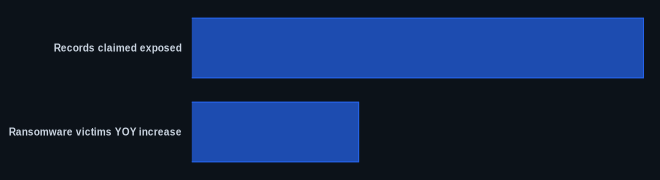
| Records claimed exposed | 10 million | Cybersecurity News |
| Ransomware victims YOY increase | 389% | FortiGuard Labs |
Our Take
We're seeing a clear pattern here. The reported use of vishing to compromise an Okta SSO account, especially after a similar incident in 2023, strongly suggests ADT hasn't adequately addressed its social engineering defenses or identity access controls. Relying solely on SSO without robust multi-factor authentication (MFA) and continuous security awareness training is a recipe for disaster. The sensitive nature of ADT's data, which essentially maps home occupancy, demands a security posture far more resilient than what seems to be in place. This isn't just about data loss; it's about potential physical harm to customers.
The CVEDaily Take
ADT's repeated vulnerability to similar breach vectors, specifically compromising employee accounts for initial access, is a critical operational failure, not just a security incident. The exposure of location-sensitive customer data presents a unique and severe risk profile. Has your team conducted a comprehensive audit of social engineering defenses and SSO configurations since ADT's 2023 breach?
FAQ
Q: What specific customer data was compromised in the ADT breach?
A: The breached information included names, phone numbers, and addresses. In a smaller percentage of cases, dates of birth and the last four digits of Social Security numbers or Tax IDs were also exposed, as confirmed by CBS News.
Q: How did the attackers gain initial access to ADT's systems?
A: The breach was reportedly initiated via a vishing attack that compromised an employee's Okta SSO account. This method, targeting identity and access management, enabled unauthorized access to customer and prospective customer data.
Q: What measures can affected individuals take in response to this breach?
A: Affected individuals are advised to change their ADT password immediately and exercise extreme caution regarding unsolicited calls or texts claiming to be from ADT, as this could be a follow-up social engineering attempt leveraging the stolen data.