
An unauthorized party accessed a portion of Trellix’s source code repository, the cybersecurity firm confirmed on May 4, 2026, highlighting the increasing threat of supply chain attacks targeting security vendors. While Trellix states there’s no evidence of exploitation or compromise to its software distribution, the incident provides threat actors with insights into detection logic, product architecture, and engineering assumptions. This type of access is typically leveraged for refining evasion techniques against security products over time, rather than immediate, disruptive action.
What Happened
On May 4, 2026, Trellix announced that an unknown threat actor had gained unauthorized access to a segment of its source code repository. The company promptly initiated an investigation, enlisting external forensic experts and notifying law enforcement authorities, as reported by SecurityWeek. As of its public statements, Trellix has found no indication that its source code release or distribution process was compromised, nor that the accessed code has been actively exploited. The specific portion of the repository accessed by the threat actor remains undisclosed by Trellix. The identity of the perpetrator is currently unknown, and no group has publicly claimed responsibility for the breach, according to Cybersecurity Dive.
Why It Matters
Access to a cybersecurity company’s source code presents a significant, albeit typically long-term, risk for its customers and the broader industry. Threat actors can use this intimate knowledge of detection logic, product architecture, and engineering choices to develop more sophisticated evasion techniques against Trellix’s security products. Trellix serves over 50,000 business and government customers, as noted by Cybersecurity Dive, making any insight into their defenses a valuable asset for adversaries. This isn't about immediate data exfiltration or ransomware; it's about gaining an advantage in the perpetual cat-and-mouse game between defenders and attackers. The incident underscores the potential for future product vulnerabilities or diminished detection capabilities if adversaries successfully weaponize this information, impacting security postures across a wide customer base.
Technical Breakdown
The Trellix source code breach exemplifies a growing trend in supply chain attacks, focusing on subverting the development pipeline or foundational components of software. While Trellix hasn't detailed the specific ingress vector, such attacks often leverage compromised developer credentials, misconfigured access controls, or vulnerabilities in integrated development environments (IDEs) or version control systems themselves. We can think of this as an attacker getting their hands on the "blueprints" for a bank's vault before ever trying to break in. They don't need to break in immediately; understanding the vault's design, its weaknesses, and the alarm system's logic allows them to plan a far more effective, patient, and ultimately successful heist.
This incident aligns with MITRE ATT&CK sub-technique T1195.002 Compromise Software Supply Chain, specifically targeting the integrity or confidentiality of software development artifacts. Gaining access to source code before it's compiled or distributed provides attackers with a unique vantage point to identify potential weaknesses, backdoors, or even inject malicious code at a later stage, though Trellix has not confirmed evidence of such exploitation. From a defensive perspective, this scenario directly relates to NIST SP 800-53 control SA-10 Developer Configuration Management, which emphasizes managing and securing the software development environment, including source code repositories, to prevent unauthorized access and modification. Tools like GitHub Advanced Security or GitLab Ultimate can provide additional layers of protection for source code, including dependency scanning and secret detection, which are critical in preventing such breaches.
Historical Context
The Trellix breach fits into a broader pattern of supply chain attacks targeting cybersecurity firms, highlighting a strategic shift by sophisticated adversaries. A notable parallel occurred in October 2025, when a nation-state actor successfully breached F5 Networks' product development environment. That incident led to the acquisition of sensitive data, including source code, for F5's critical BIG-IP product line, as reported by Dark Reading.
While the F5 breach specifically involved a nation-state actor and a critical network infrastructure product, the Trellix incident shares the commonality of targeting source code for intelligence gathering rather than immediate disruptive action. Both cases demonstrate attackers' interest in understanding the inner workings of security products to refine evasion techniques. The Trellix breach also echoes the March 2026 attacks by the TeamPCP threat group, which compromised open-source tools like Trivy (maintained by Aqua Security) and KICS (developed by Checkmarx) by targeting GitHub Actions workflows to introduce poisoned versions. While TeamPCP focused on injecting malicious components, the underlying strategy of manipulating the supply chain to gain access or influence code is fundamentally similar across these incidents.
Data at a Glance
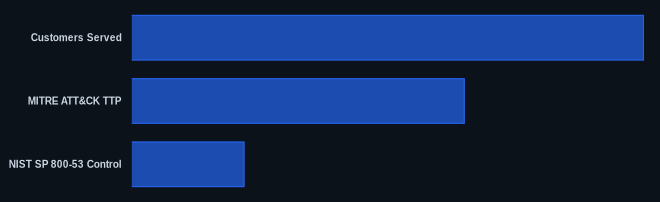
| Metric | Value | Source |
|---|---|---|
| Disclosure Date | May 4, 2026 | SecurityWeek |
| Customers Served | 50,000+ | Cybersecurity Dive |
| Detected Exploitation | 0 (no evidence) | Dark Reading |
| MITRE ATT&CK TTP | T1195.002 | MITRE ATT&CK |
| NIST SP 800-53 Control | SA-10 | NIST |
Our Take
We see this Trellix breach as a clear signal that sophisticated actors are increasingly playing the long game. It's not always about immediate financial gain or data exfiltration. Often, it's about persistent intelligence gathering to erode the efficacy of security controls over time. This makes detecting the initial intrusion even harder, as the adversary might not leave a typical ransomware or destructive payload footprint. Security teams must assume that product architecture and detection logic, even from trusted vendors, are increasingly exposed and prepare their own defenses for more nuanced, informed evasion techniques. Implementing stringent access controls like Cloudflare Zero Trust for internal development environments and leveraging multi-factor authentication with YubiKey for all code repository access are no longer best practices; they're table stakes.
The CVEDaily Take
This Trellix source code breach is a stark indicator of how the software supply chain has become a primary target, especially for cyber espionage and strategic advantage. The lack of immediate exploitation evidence should not be misinterpreted as a lack of impact; the intelligence gathered is a long-term asset for adversaries. How has your team adjusted its risk modeling for third-party security product efficacy given the ongoing trend of vendor source code breaches?
FAQ
Q: Has Trellix confirmed active exploitation of the stolen source code?
A: No, Trellix has explicitly stated that, as of their current investigation, they have found no evidence of their source code being actively exploited or their software distribution process being compromised.
Q: What type of information can threat actors gain from source code access?
A: Threat actors can gain insights into a security product's detection logic, its underlying architecture, engineering assumptions, and potentially discover undisclosed vulnerabilities or design weaknesses that could be exploited in future attacks.
Q: Is this part of a larger trend or an isolated incident?
A: Industry analysts, including Dark Reading, indicate that this incident is part of a growing trend of supply chain attacks targeting cybersecurity firms and open-source projects, often aimed at gaining long-term strategic advantage.
