
CISA launched 'CI Fortify: Strengthening Resilience Across Critical Infrastructure', a nationwide initiative to help critical infrastructure organizations operate through severe cyberattacks from nation-state actors, emphasizing resilience and continuity of essential services. This program comes amidst increasing geopolitical cyberattacks, which often escalate due to organizational unpreparedness. The initiative recognizes that many critical sectors are "target-rich, cyber-poor," possessing valuable assets but lacking the resources to defend against sophisticated threats.
What Happened
The Cybersecurity and Infrastructure Security Agency (CISA) officially rolled out 'CI Fortify' to bolster critical infrastructure (CI) resilience against escalating cyber threats, particularly from persistent nation-state adversaries. These actors frequently target vital systems across telecommunications, water, energy, and transportation, seeking continuous access to disrupt essential services. The program's core objective is to ensure that CI organizations can maintain operations during crises or conflicts, thereby guaranteeing the uninterrupted delivery of essential services. CISA's efforts align with the broader understanding that a robust cybersecurity posture for critical infrastructure is crucial for national security and economic stability SecurityWeek.
CI Fortify aims to bridge significant resource gaps, especially in vulnerable sectors. The World Economic Forum's Global Cybersecurity Outlook 2026 report highlights a widening cyber inequity, with many sectors lacking sufficient funding, skills, and access to robust security tools World Economic Forum. The initiative provides guidance and resources to strengthen preparedness and response capabilities, focusing on the ability to operate effectively even while under attack. This includes developing robust incident response plans, implementing endpoint containment, and deploying network segmentation strategies. The program also stresses the importance of continuous monitoring, proper access permissions, and encryption policies to mitigate risks from misconfigured cloud environments, which led to a significant data exposure in January 2026 involving 149 million records.
Why It Matters
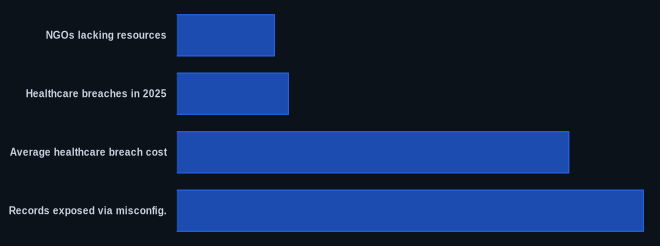
The necessity for CI Fortify is starkly illustrated by the current state of critical sectors, many of which are "target-rich, cyber-poor." This term encapsulates their high value to adversaries juxtaposed with often insufficient cybersecurity resources to repel sophisticated attacks. For instance, 51% of NGOs reported lacking essential resources, according to the World Economic Forum's 2026 outlook World Economic Forum. The healthcare sector exemplifies this vulnerability, with the FBI reporting more cyber incidents in healthcare than any other critical infrastructure sector in 2024. Furthermore, 92% of healthcare organizations experienced at least one cyberattack in 2025, with the average global cost of a healthcare data breach reaching $7.42 million in 2025.
These statistics underscore the critical need for initiatives like CI Fortify. Without enhanced resilience, successful attacks on critical infrastructure can lead to widespread societal disruption, economic instability, and potential national security crises. The initiative's focus on operational continuity during an attack is vital, moving beyond mere prevention to ensure essential services can persist. This means even if an adversary gains initial access, robust incident handling and containment procedures, perhaps leveraging tools like CrowdStrike Falcon for endpoint detection and response, can limit the impact and maintain service delivery. The broader context of increasing geopolitical tensions makes this program particularly timely, as nation-state actors are increasingly willing to use cyber warfare to achieve strategic objectives.
Technical Breakdown
CI Fortify's technical emphasis revolves around developing organizational capabilities to not just defend, but actively operate through cyberattacks. This demands a shift from a perimeter-centric defense to a more resilient, adaptive posture. When an adversary achieves initial access, often through social engineering or exploiting public-facing applications (MITRE ATT&CK: T1190), their goal is usually persistence and lateral movement within the network. For example, they might use NTLM hashes for T1003 OS Credential Dumping to gain further access to internal systems, escalating privileges to control critical infrastructure components.
Imagine an attacker compromising a network like water flowing into a segmented dam. If the dam (your network) has strong, isolated compartments (network segmentation), the water (attack) might fill one section, but it won't immediately flood the entire system. Instead of focusing solely on preventing the initial leak, CI Fortify emphasizes ensuring that the other dam compartments remain functional and isolated, allowing the essential flow of water to continue. This translates to robust network segmentation, endpoint containment procedures, and a mature incident response plan. Organizations should also focus on strong IA-2 Identification and Authentication (Organizational Users) controls, especially for privileged accounts, perhaps integrating hardware tokens like YubiKey to thwart common credential theft attempts. The program explicitly addresses risks from misconfigured cloud environments, which often become vectors for T1078 Valid Accounts leading to data exposure. This necessitates stringent adherence to CM-6 Configuration Settings and continuous monitoring.
Historical Context
The focus on critical infrastructure resilience, particularly against nation-state threats, isn't new. A notable incident was the 2015 attack on Ukraine's power grid, attributed to the Sandworm group. This attack, which utilized sophisticated malware like BlackEnergy, successfully caused widespread power outages, impacting hundreds of thousands of residents. While CI Fortify emphasizes resilience through attacks, the Ukraine incident highlighted the profound impact of disruptive cyberattacks on essential services.
Similar to CI Fortify's premise, the Ukrainian attack demonstrated how malicious nation-state actors seek persistent access to disrupt or destroy critical systems. However, a key difference is that while the 2015 Ukraine attack was a stark demonstration of operational technology (OT) disruption, CI Fortify broadens its scope to include IT systems that support CI and places a stronger emphasis on maintaining operations during such an event. Post-2015, the industry has seen an increased focus on securing OT environments and establishing better IT/OT convergence security, often with solutions like SentinelOne offering integrated threat detection across both domains. This initiative aims to preemptively build the capabilities that were largely reactive after the Ukrainian grid went dark.
Data at a Glance
| Metric | Value | Source |
|---|---|---|
| NGOs lacking resources | 51% | World Economic Forum |
| Healthcare breaches in 2025 | 92% | World Economic Forum |
| Average healthcare breach cost | $7.42 million (2025) | World Economic Forum |
| Records exposed via misconfig. | 149 million (Jan 2026) | SecurityWeek |
| FBI: Healthcare incidents (2024) | Most of any CI sector | SecurityWeek |
Our Take
We've seen countless "initiatives" come and go, but CI Fortify appears to have a critical, pragmatic focus: not just preventing attacks, but enabling operational continuity during them. The recognition that these sectors are "target-rich, cyber-poor" is a blunt and necessary truth. For too long, the cybersecurity conversation has been dominated by large enterprises with deep pockets; this initiative finally acknowledges the significant resource disparities and aims to provide tangible guidance rather than just platitudes. We think the emphasis on operational resilience over perfect prevention is a mature perspective, reflecting the reality that advanced persistent threats will eventually breach even the most hardened defenses.
The CVEDaily Take
CISA's CI Fortify is a timely and necessary recognition of the current geopolitical cyber reality. Focusing on resilience and operational continuity for critical infrastructure fundamentally shifts the goalposts from a defensive stance to one of sustained service delivery. This isn't just about preventing breaches; it's about minimizing their impact when they inevitably occur. Is your organization actively practicing incident response scenarios that assume initial compromise of a critical system?
FAQ
Q: What is the primary goal of CI Fortify?
A: CI Fortify's primary goal is to enhance the resilience of critical infrastructure organizations, enabling them to continue operating and delivering essential services even while under severe cyberattack, particularly from nation-state adversaries.
Q: Which critical infrastructure sectors are specifically targeted by CI Fortify?
A: The initiative broadly covers critical infrastructure, with specific mentions of telecommunications, water, energy, and transportation, alongside vulnerable sectors like healthcare and education, which often lack adequate cybersecurity resources.
Q: How does CI Fortify address the "target-rich, cyber-poor" challenge?
A: CI Fortify aims to address this disparity by providing guidance and resources to strengthen preparedness and response capabilities, focusing on developing incident response plans, implementing endpoint containment, and employing network segmentation strategies to bolster resilience where resources may be scarce.
