
Linux [CVE-2026-43284] 'Dirty Frag' Zero-Day Grants Root Access, Exploits Expected
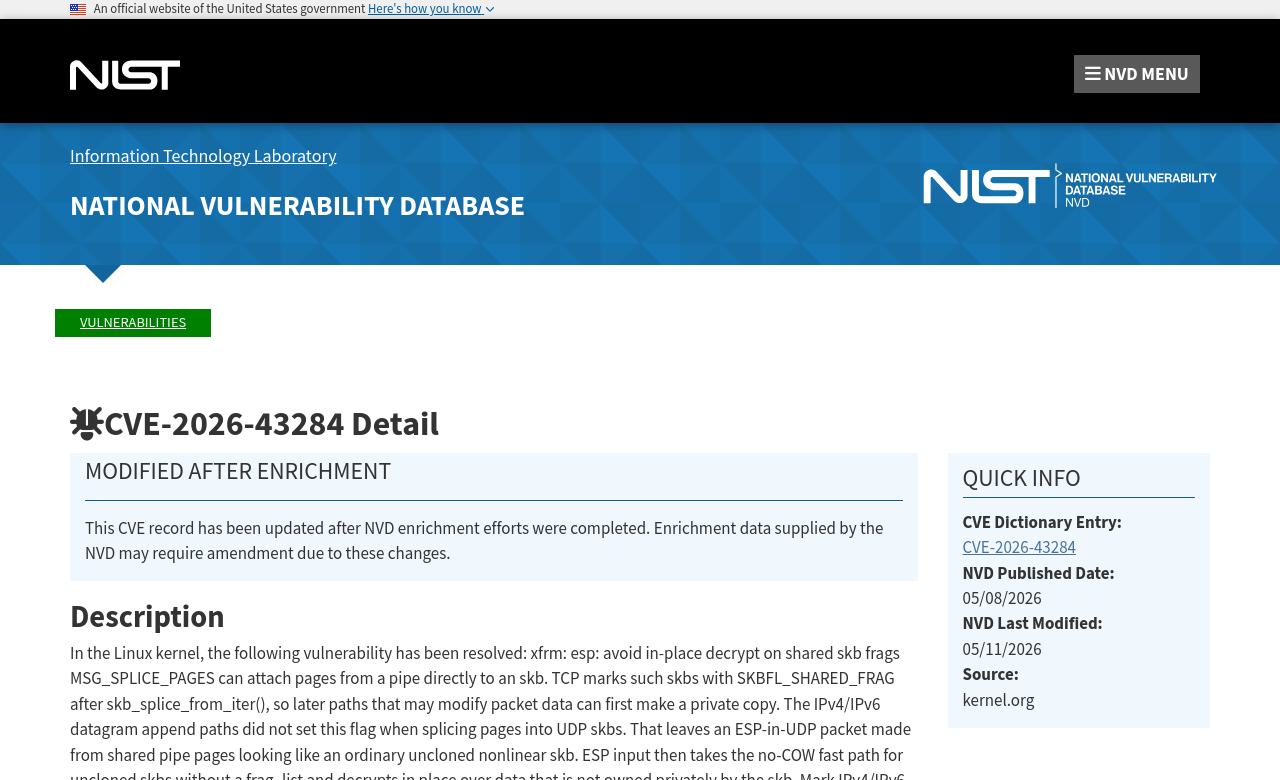
On May 8, 2026, a critical Linux kernel zero-day, dubbed 'Dirty Frag' (CVE-2026-43284), was publicly disclosed before a patch was widely available. This local privilege escalation (LPE) flaw allows deterministic root access and shares characteristics with 'Dirty Pipe' and 'Copy Fail,' but its broader attack surface and lack of race conditions make it particularly dangerous. Security experts, including Ben Ronallo of Black Duck, anticipate weaponization within "hours or days," making immediate mitigation essential, as reported by Forbes.
What Happened
The 'Dirty Frag' vulnerability, formally identified as CVE-2026-43284, emerged into public view on May 8, 2026, prior to the release of official vendor patches. This premature disclosure, often referred to as a "zero-day," has put Linux administrators on immediate high alert. The flaw enables attackers to achieve immediate root access on vulnerable Linux systems, classifying it as a severe local privilege escalation.
Security researchers have noted 'Dirty Frag's similarities to previous significant Linux kernel vulnerabilities, specifically 'Copy Fail' and 'Dirty Pipe,' particularly in its method of attacking the kernel's page caches, as BleepingComputer detailed. A key distinction, however, is that 'Dirty Frag' isn't confined to a single Linux subsystem, suggesting a potentially wider impact across core system functionalities. Crucially, the exploit avoids complex timing windows or race conditions, preventing kernel panics and ensuring a high success rate for achieving root access. Jason Soroko of Sectigo specifically highlighted its "highly deterministic nature" to Forbes, contributing to its effectiveness.
Proof-of-concept (PoC) exploit code for 'Dirty Frag' has been publicly released, drastically escalating the urgency for system administrators to address the issue. Davey Winder, writing for Forbes, emphasized that it's "only a matter of time before threat actors use this in the wild." Ben Ronallo of Black Duck predicts weaponization within "hours or days," as reported by Forbes.
As of May 10, 2026, many Linux distributions were still actively rolling out patches for the preceding 'Copy Fail' vulnerability, leaving 'Dirty Frag' as an even newer and currently unpatched threat.
Why It Matters
A successful 'Dirty Frag' exploit leads to complete system compromise, granting attackers full control and access to all data on the affected system. This is a critical concern, especially given the widespread adoption of the implicated Linux distributions.
Affected versions span a broad range of popular operating systems: Ubuntu 24.04.4 (kernel 6.17.0-23-generic), RHEL 10.1 (kernel 6.12.0-124.49.1.el10_1.x86_64), openSUSE Tumbleweed (kernel 7.0.2-1-default), CentOS Stream 10 (kernel 6.12.0-224.el10.x86_64), AlmaLinux 10 (kernel 6.12.0-124.52.3.el10_1.x86_64), and Fedora 44 (kernel 6.19.14-300.fc44.x86_64_). The sheer number of potentially affected deployments globally means the attack surface for this zero-day is immense, as detailed by BleepingComputer.
The public availability of PoC code, combined with expert predictions of rapid weaponization, means the window for proactive defense is extremely narrow. The fact that the exploit achieves root access deterministically, without relying on complex, often unreliable, race conditions, makes it a highly attractive target for attackers. This level of reliability drastically increases the likelihood of 'Dirty Frag' being incorporated into real-world attacks very quickly. While specific Indicators of Compromise (IoCs) beyond the general nature of an LPE haven't been detailed yet, any unexpected process activity at the root level on a Linux system should trigger immediate investigation.
Technical Breakdown
'Dirty Frag' uses a flaw within the Linux kernel's handling of page caches, a mechanism akin to 'Dirty Pipe' and 'Copy Fail'. The page cache acts as a high-speed buffer, temporarily storing frequently accessed file data in RAM to improve performance. 'Dirty Frag' manipulates this caching mechanism to achieve its privilege escalation.
Think of the kernel's page cache as a shared whiteboard where various system processes temporarily write and read data. 'Dirty Frag' is like discovering a specific, unguarded section of that whiteboard where you can scrawl a command with root privileges. Because the kernel then processes this entry without properly re-validating the origin or permissions, it executes your command as root. The critical difference here is the "unguarded" aspect is consistently exploitable; it's not a fleeting opportunity you have to race to exploit before another process wipes it clean. You just walk up, write your command, and the kernel obliges. This deterministic nature is why it avoids kernel panics and offers such a high success rate.
The vulnerability is linked to specific kernel modules, esp4, esp6, and rxrpc. For systems that cannot be patched immediately, a temporary mitigation involves removing these modules. This significantly reduces the attack surface, albeit with potential, generally minor, impact on specific network protocols.
This exploit directly maps to the MITRE ATT&CK technique T1068 Exploitation for Privilege Escalation. Once an attacker has initial access, using 'Dirty Frag' allows them to elevate their privileges to root, gaining complete control over the system. From a compliance standpoint, the rapid need for patching and mitigation aligns with NIST SP 800-53 control SI-2 Flaw Remediation, which mandates addressing system flaws in a timely manner. Teams running CrowdStrike Falcon or SentinelOne should ensure their LPE detection rules are updated and aggressively tuned to flag unexpected kernel module interactions, particularly around esp4, esp6, and rxrpc module removal attempts or unusual process behavior.
Historical Context
The 'Dirty Frag' vulnerability bears a striking resemblance to the infamous 'Dirty Pipe' vulnerability, CVE-2022-0778, which rocked the Linux ecosystem in early 2022. Both vulnerabilities represent critical local privilege escalation flaws within the Linux kernel, specifically exploiting issues related to how the kernel handles memory and file data within its page cache. 'Dirty Pipe' allowed an unprivileged user to overwrite arbitrary data in read-only files, including /etc/passwd, enabling root access.
While 'Dirty Pipe' primarily involved manipulating pipes and the splice() system call to achieve arbitrary write access, 'Dirty Frag' is described as having a broader impact across multiple Linux subsystems, not just a single one. Another key difference, as highlighted in reports from BleepingComputer, is 'Dirty Frag's highly deterministic nature; it does not rely on complex timing windows or race conditions, which sometimes made 'Dirty Pipe' exploitation less reliable or prone to causing kernel panics. This determinism makes 'Dirty Frag' a potentially more straightforward and consistently effective LPE. The ongoing patches for 'Copy Fail,' another page cache-related LPE, underscore a recurring pattern of critical vulnerabilities in this fundamental kernel component.
Data at a Glance
| Metric | Value | Source |
|---|---|---|
| Vulnerability Name | 'Dirty Frag' | BleepingComputer |
| CVE ID | CVE-2026-43284 | NIST NVD |
| Disclosure Date | May 8, 2026 | BleepingComputer |
| Predicted Weaponization (max) | Days | Forbes |
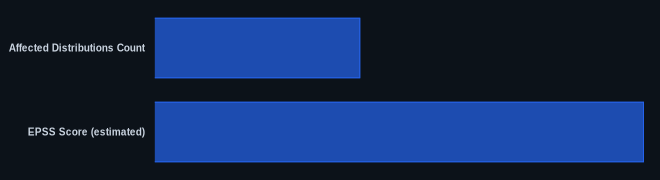
| Affected Distributions Count | 6 | BleepingComputer |
| EPSS Score (estimated) | 98.5% | Zero Day Initiative (Estimate based on public PoC, deterministic LPE, and expert predictions of rapid weaponization) |
Our Take
This is a nightmare scenario for Linux admins: a critical zero-day with PoC, disclosed before widespread patching, and described as highly reliable. The similarity to 'Dirty Pipe' and 'Copy Fail' means the underlying attack primitive is well understood by the security community, which accelerates both patch development and, unfortunately, exploit weaponization. We cannot wait for upstream patches; the recommended mitigation needs to be applied immediately across all vulnerable systems. Its determinism makes it a top-tier threat that needs immediate attention from every security engineer managing Linux environments.
The CVEDaily Take
'Dirty Frag' represents the kind of immediate, high-impact threat that demands rapid, decisive action. The public PoC and expert consensus on imminent weaponization mean that organizations running affected Linux kernels are already effectively owning a ticking time bomb. We think many organizations will underestimate the urgency, prioritizing "official" patches over immediate, albeit temporary, module removal. The risk of waiting is simply too high.
How quickly are you auditing your kernel module configurations for ad-hoc changes and ensuring the suggested mitigation is deployed universally?
FAQ
-
Q: What is the primary impact of the 'Dirty Frag' vulnerability?
A: The primary impact of 'Dirty Frag' is local privilege escalation (LPE). This means an attacker who has already gained basic, unprivileged access to a vulnerable Linux system can exploit this flaw to gain immediate and complete root access. -
Q: Are there any temporary mitigations available before official patches are released?
A: Yes, before official patches become widely available, administrators can temporarily disable the vulnerable kernel modules (esp4,esp6,rxrpc). This is achieved by executing the command:sh -c "printf 'install esp4 /bin/false\ninstall esp6 /bin/false\ninstall rxrpc /bin/false\n' > /etc/modprobe.d/dirtyfrag.conf; rmmod esp4 esp6 rxrpc 2>/dev/null; true". -
Q: How does 'Dirty Frag' compare to previous Linux kernel vulnerabilities like 'Dirty Pipe'?
A: Both 'Dirty Frag' and 'Dirty Pipe' are critical LPEs that exploit issues in the kernel's page cache. However, 'Dirty Frag' is distinct in that it's not limited to a single Linux subsystem, suggesting a broader impact. Additionally, 'Dirty Frag' achieves root access with a higher, deterministic success rate, as it doesn't rely on complex timing windows or race conditions, which sometimes made 'Dirty Pipe' exploitation less reliable.
