The Nitrogen ransomware group claims to have disrupted operations at multiple Foxconn North American factories, stating they stole 8 terabytes of data comprising over 11 million documents BleepingComputer. Foxconn has not confirmed the scope or nature of the data claimed stolen, but did report the incident on May 22, 2026. This attack, which reportedly used commodity techniques like malvertising, DLL sideloading, and Cobalt Strike, appears to have effectively compromised a major supply chain entity, potentially leading to significant data exfiltration from several large tech companies.
What Happened
On May 22, 2026, the Nitrogen ransomware group announced a successful attack on Foxconn, stating they targeted and disrupted operations at several of its North American facilities SecurityWeek. The group claims to have exfiltrated a massive 8 terabytes of data, which they say includes over 11 million documents, as reported by The Hacker News. Foxconn has not confirmed these claims regarding the volume or type of data stolen. The group asserts this stolen data contains highly sensitive information such as confidential instructions, project blueprints, and engineering drawings.
The Nitrogen group claims this data pertains to major tech industry players, including AMD, Apple, Google, Intel, and Nvidia BleepingComputer. Other corporations potentially implicated by the alleged data exfiltration include Hewlett Packard Enterprise (HPE), JPMorgan Chase, ASPEED, Renesas, and Tencent. Foxconn has activated its incident response protocols, implementing operational measures to ensure production continuity and delivery schedules. Affected factories are reportedly resuming normal production DarkReading. Foxconn has not commented publicly on the specifics of the data exfiltration claims.
Why It Matters
The Nitrogen group's claim of 8TB of sensitive data, encompassing project designs and confidential instructions from companies like Apple and Google, represents a significant alleged intellectual property loss and potential competitive disadvantage BleepingComputer. Blueprints for future products are a key target for espionage.
The incident shows a persistent vulnerability: even with mature security programs, well-known "commodity techniques" can still breach large, high-value targets. This isn't a zero-day exploit. It shows that fundamental defenses against common attack patterns remain crucial, especially when protecting critical infrastructure within a complex supply chain ecosystem CISA. The operational disruption itself, even if factories are resuming production, still carries a cost in terms of downtime and incident response.
Technical Breakdown
The Nitrogen group uses 'commodity techniques,' which are widely available and well-documented attack methods. Initial access often involves malvertising, where legitimate ad networks are subverted to deliver malware SecurityWeek. This is like a trusted postal service unknowingly delivering poisoned mail (the malicious ad leading to malware) directly to a user's browser.
Once an initial foothold is established, the attackers use techniques like DLL sideloading. This involves tricking a legitimate application into loading a malicious Dynamic Link Library (DLL) file instead of its intended, benign counterpart. When the legitimate application launches, it unwittingly executes the malicious code within the attacker's DLL, allowing arbitrary code execution with the permissions of the legitimate application.
For post-exploitation activities, including lateral movement, privilege escalation, and data exfiltration, Nitrogen heavily relies on Cobalt Strike DarkReading. Cobalt Strike is a legitimate penetration testing tool, but threat actors frequently misuse it for its powerful capabilities in simulating advanced attack scenarios, establishing command-and-control (C2) channels, and managing compromised systems. Detecting its beacon activity, even over common C2 channels, is critical for any endpoint protection platform; tools like CrowdStrike Falcon or SentinelOne are designed for this kind of threat intelligence and behavior analysis.
The attack tactics here align with several MITRE ATT&CK techniques. Initial compromise through malvertising falls under T1189 Drive-by Compromise. The subsequent DLL sideloading for execution can be mapped to T1203 Exploitation for Client Execution, as it involves tricking the client into executing malicious code. For the data exfiltration aspect using Cobalt Strike, T1041 Exfiltration Over C2 Channel is a direct fit, where data leaves the compromised network over the established command and control communication channels. From a defensive perspective, this incident reinforces the importance of NIST SP 800-53 control SI-3 Malicious Code Protection, emphasizing the need for robust endpoint defenses and continuous monitoring for known malware and exploitation patterns.
Historical Context
This isn't Foxconn's first encounter with ransomware. In 2024, the LockBit ransomware gang successfully breached Foxsemicon, a Foxconn subsidiary, exfiltrating an estimated 5 terabytes of data DarkReading. The LockBit attack, while utilizing a different ransomware group, shared critical similarities: a focus on data exfiltration, disruption of operations, and targeting a key player in the global supply chain.
The key differences lie in the volume of data claimed and the specific methodologies. Nitrogen claims 8 terabytes this time, compared to LockBit's 5 terabytes against the subsidiary. While LockBit often exploited known vulnerabilities or weak RDP configurations, Nitrogen's reliance on 'commodity techniques' like malvertising and DLL sideloading for initial access shows a continued use of simpler, yet still highly effective, methods for breaching large enterprises. Both incidents, however, underscore the consistent targeting of global manufacturing and supply chain entities for both financial gain and intellectual property theft.
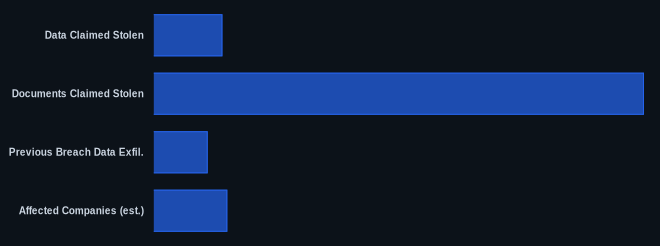
Data at a Glance
| Metric | Value | Source |
|---|---|---|
| Data Claimed Stolen | 8 TB | BleepingComputer |
| Documents Claimed Stolen | 11 million documents | The Hacker News |
| Incident Reported | May 22, 2026 | SecurityWeek |
| Previous Breach Data Exfil. | 5 TB | DarkReading |
| Affected Companies (est.) | 10+ | BleepingComputer |
The CVEDaily Take
This Foxconn incident isn't a testament to Nitrogen's "advanced" tradecraft, but rather a strong indicator of persistent defense gaps against well-understood TTPs in critical supply chains. When commodity tools can exfiltrate terabytes of IP from tech giants, it's not a failure of innovation, but often a failure in execution of fundamental cyber hygiene. We think the focus needs to shift from simply having security tools to actively validating their effectiveness against common attacker playbooks.
What's your team's current detection rate for Cobalt Strike beacon activity on endpoints, even when using common C2 channels?
FAQ
Q1: What is Nitrogen ransomware?
A: Nitrogen is a ransomware group that uses commonly available attack techniques, including malvertising for initial access, DLL sideloading for code execution, and the legitimate penetration testing tool Cobalt Strike for post-exploitation activities like lateral movement, privilege escalation, and data exfiltration, ultimately deploying ransomware to disrupt operations.
Q2: Which major tech companies' data was reportedly exposed in the Foxconn incident?
A: The Nitrogen group claims to have stolen confidential data, including instructions, projects, and drawings, from prominent tech companies such as AMD, Apple, Google, Intel, and Nvidia, among others, during their attack on Foxconn. No affected organization has confirmed this claim.
Q3: What makes this attack notable given its use of 'commodity techniques'?
A: This attack is notable because despite using well-known and detectable 'commodity techniques,' the Nitrogen group claims to have successfully breached a critical global supply chain entity like Foxconn, disrupting operations and allegedly stealing a massive 8 terabytes of sensitive data. This highlights the continued effectiveness of these foundational attack methods against large enterprises that may struggle with consistent defense-in-depth or continuous validation of security controls.
