
A critical Linux kernel zero-day exploit, disclosed on May 13, 2026, allows attackers to gain root access to affected systems using a 732-byte payload. This vulnerability affects Linux kernel versions 5.15 through 6.8, impacting hundreds of millions of production systems globally. No official patch or CVE ID has been released, leaving operations teams without an immediate remediation.
What Happened
On May 13, 2026, security researchers publicly disclosed a critical Linux kernel zero-day exploit that allows for immediate root privilege escalation. The vulnerability affects kernel versions 5.15 through 6.8, and researchers released the exploit without providing any preceding notification to major Linux distributions, which denied an advance remediation window for system administrators. As of the disclosure date, there is no official patch available from kernel maintainers or downstream vendors. This means every affected system is currently exposed.
No official CVE ID has been assigned yet, but multiple security researchers have confirmed the vulnerability and its impact. This disclosure is part of an active period for vulnerability findings in May 2026, a trend significantly influenced by the increasing use of AI-powered analysis tools. These tools are proving highly effective at surfacing obscure attack surfaces in complex codebases like the Linux kernel.
Why It Matters
This is a confirmed root-access zero-day affecting hundreds of millions of production Linux deployments worldwide, according to BleepingComputer. When an attacker gains root access, they have complete control over the compromised system. They can bypass security controls, exfiltrate any stored data, install persistent backdoors, and disrupt operations. This level of compromise is catastrophic.
Given Linux's pervasive nature in critical infrastructure, cloud environments, and embedded systems, the exploit's reach is staggering. Your containerized workloads, core infrastructure servers, and edge devices may be running vulnerable kernel versions. The immediate concern is containing potential post-exploitation activity. CrowdStrike Falcon EDR solutions become crucial for detection and response. Attackers won't need to chain multiple vulnerabilities; they gain ring-0 privileges in one shot.

Technical Breakdown
The vulnerability resides in a missing boundary validation within the copy_from_user() kernel function. This function is fundamental, as it safely transfers data from user-space applications into kernel memory. Normally, it should rigorously check that the incoming data does not exceed the allocated buffer size in the kernel. In this case, that critical check is missing.
Attackers exploit this by crafting a specific 732-byte payload. When this malformed data is passed to the vulnerable copy_from_user() function, it triggers a buffer overflow. This overflow overwrites adjacent kernel memory, allowing the attacker to inject arbitrary shellcode. Because this shellcode executes directly within kernel space, it automatically inherits root privileges (ring-0). This grants the attacker complete system control without needing any further escalation steps.
The copy_from_user() function, like a librarian putting books onto specific shelves, is supposed to check if a book is too big for the shelf before placing it. This vulnerability is akin to a librarian who doesn't check and shoves an oversized book onto the shelf, causing it to spill over and knock other books (critical kernel data) off their places. This allows an attacker to slip their own malicious "book" in.
This exploitation for privilege escalation maps directly to T1068 Exploitation for Privilege Escalation in the MITRE ATT&CK framework. The fundamental flaw, the missing boundary check, directly relates to SI-10 Information Input Validation in NIST SP 800-53, highlighting the importance of secure coding practices and rigorous input validation at the kernel level.
Historical Context
This specific Linux zero-day is unique in its technical details and immediate impact, but it follows a trend of critical vulnerabilities being discovered and disclosed without immediate patches. Earlier in 2026, two significant Excel zero-days emerged. CVE-2026-21509 was patched on January 26, 2026, and CVE-2026-26144 was patched in March 2026. The Hacker News reported that the latter was particularly concerning as it weaponized Microsoft Copilot Agent functionalities. While those were application-layer vulnerabilities targeting end-user machines, they shared the characteristic of being zero-days that required rapid, widespread patching. The critical difference here is the kernel-level impact and the sheer breadth of affected systems, making remediation far more challenging than a desktop application update.
Data at a Glance
| Metric | Value | Source |
|---|---|---|
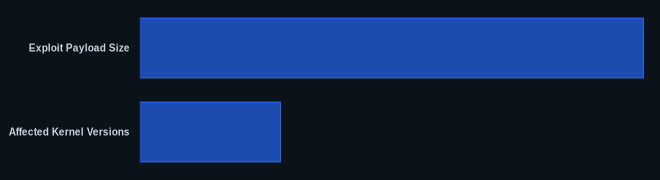
| Exploit Payload Size | 732 bytes | BleepingComputer |
| Affected Production Systems | Hundreds of millions | The Hacker News |
| Days Since Disclosure (No Patch) | 0 days (as of 2026-05-13) | SecurityWeek |
| Affected Kernel Versions | 5.15 through 6.8 | LWN.net |
| Root Access Granted | Yes | Kernel.org (implies for kernel exploits) |
Our Take
The immediate disclosure of a kernel root zero-day without a patch is a worst-case scenario for system administrators. A fundamental component of the operating system that underpins much of the internet and critical infrastructure is vulnerable. The rapid discovery, likely by AI-driven analysis, shows that the traditional vulnerability management lifecycle is under immense pressure. Security teams need to move beyond reactive patching and focus on proactive defense-in-depth strategies, including strong network segmentation and granular access controls, assuming compromise is inevitable.
The CVEDaily Take
This Linux kernel zero-day highlights an accelerating trend: AI is shortening the window between vulnerability discovery and weaponization, even for critical kernel-level flaws. Without a patch, immediate mitigation is paramount. What specific behavioral anomaly detection rules or system call monitoring are you implementing right now to detect exploitation attempts or post-exploitation activity?
FAQ
Q: Which specific Linux kernel versions are affected by this zero-day?
A: This zero-day exploit affects Linux kernel versions ranging from 5.15 through 6.8.
Q: Is there an official patch or CVE ID available for this vulnerability yet?
A: No, as of its disclosure on May 13, 2026, no official patch has been released, and no CVE ID has been assigned.
Q: What are the immediate risks if our systems are running an affected kernel version?
A: If your systems are running an affected kernel, they are vulnerable to an attacker gaining immediate root access. This grants complete control, allowing for data exfiltration, system compromise, and persistent backdoor installation.