Google’s advanced threat detection systems caught the first known AI-generated zero-day exploit on May 18, 2026, preventing what the company called a "mass exploitation event" targeting two-factor authentication (2FA).
What Happened
On May 18, 2026, Google identified a novel zero-day exploit specifically designed to bypass 2FA mechanisms, according to BleepingComputer. Google has not publicly disclosed details about the exploit's specific CVE ID or technical mechanisms, beyond its capability to circumvent 2FA. This early detection reportedly prevented widespread compromise before any mass exploitation could occur; Google has not confirmed the potential scale of the unprevented exploitation.
Simultaneously, Anthropic is actively revising its policy for partners using its Mythos cybersecurity model, an unreleased Claude Mythos Preview model. This model, a core component of "Project Glasswing," is being used by select organizations, including Amazon, Microsoft, Nvidia, and Apple, for defensive cybersecurity applications, as reported by The Hacker News. Experts at Wired state Mythos's high-level coding capabilities make it effective at identifying vulnerabilities. The Pentagon is deploying Mythos to find and patch software vulnerabilities across the U.S. government.
Mozilla also gained early access to Mythos, using it to identify hundreds of bugs in Firefox 150, demonstrating its defensive potential, per Dark Reading.
Why It Matters
This is the first confirmed instance of an AI creating a zero-day exploit. This fundamentally changes vulnerability management and threat detection. Defensive AI must evolve at the same pace as offensive AI, or faster.
The World Economic Forum's Annual Meeting on Cybersecurity 2026 emphasized this shift, framing cybersecurity as a systemic imperative in an AI-driven world, notes Security Affairs. AI model risk is now a recognized operational concern. We face threats generated by machines that can learn and adapt, pushing the boundaries of what manual analysis can detect.
Organizations like Amazon and Microsoft using Anthropic's Mythos are investing in an AI that can proactively discover and patch flaws. This is about meeting AI-powered adversaries with AI-powered defense. Two-factor authentication, even with strong authenticator apps or hardware keys like YubiKey, is only as strong as the underlying implementation.

Technical Breakdown
While Google has not released specific details of the exploit beyond its 2FA bypass capability, the core issue is an AI's ability to identify and chain logic flaws or implementation weaknesses that human attackers might miss or take significantly longer to discover. A 2FA bypass typically involves manipulating session tokens, exploiting race conditions, or using flaws in recovery or fallback mechanisms to authenticate without the second factor.
An AI doesn't just try common bypasses; it might discover a novel way to trick the system entirely, generating the exact malicious code required. This is a significant leap beyond traditional fuzzing or brute-force methods.
The objective of such an exploit would be to gain unauthorized access to accounts, mapping to T1078 Valid Accounts in MITRE ATT&CK. By bypassing 2FA, the AI-generated exploit grants threat actors access to systems as if they were legitimate users, effectively giving them a valid account to operate from.
From a defensive standpoint, this attack highlights the critical need for strong authentication management. The relevant NIST SP 800-53 control here is IA-2 Identification and Authentication (Organizational Users). Ensuring strong, AI-resilient identification and authentication controls is paramount, especially as offensive AI techniques mature. This includes continuous monitoring of authentication logs for anomalies and rapidly patching any discovered 2FA implementation flaws.
Historical Context
The use of AI in cyberattacks isn't entirely new, but the generation of a zero-day is a significant leap. In January 2026, a deepfake AI-generated video was used to orchestrate a $25 million theft, as reported by The Hacker News. That incident showcased AI's capability in sophisticated social engineering and impersonation.
Earlier, in 2025, we saw the emergence of "LunaLock Ransomware: The Rise of AI-Driven Extortion" and "PromptLock: The First AI-Powered Ransomware Prototype," detailed by Security Affairs. These examples demonstrated AI's role in crafting malicious payloads and automating ransomware operations. However, those were primarily about deploying or customizing attacks. The Google incident marks the first confirmed time AI discovered and engineered a completely novel exploit for a previously unknown vulnerability. The difference is moving from AI-assisted execution to AI-driven discovery and creation.
Data at a Glance
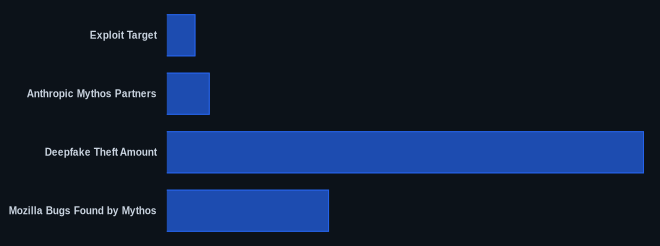
| Metric | Value | Source |
|---|---|---|
| Exploit Detection Date | May 18, 2026 | BleepingComputer |
| Exploit Target | 2FA bypass | BleepingComputer |
| Anthropic Mythos Partners | 4 organizations | The Hacker News |
| Deepfake Theft Amount | $25 million | The Hacker News |
| Mozilla Bugs Found by Mythos | ~300 bugs | Dark Reading |
The CVEDaily Take
The first AI-generated zero-day marks a critical inflection point. We believe Google's detection proves the "AI arms race" is less about human teams using AI tools, and more about autonomous AI systems directly engaging in offensive and defensive operations. This is not about AI helping attackers; it's about AI being the attacker. We need to prepare for more of these attacks, faster and against more complex targets, making proactive, self-learning AI defenses mandatory.
How are your current threat models accounting for autonomous AI adversaries, specifically for 2FA bypasses?
FAQ
Q: What exactly is an AI-generated zero-day exploit?
A: It's an exploit for a previously unknown software vulnerability that was discovered and weaponized by an artificial intelligence model, rather than by human security researchers or threat actors. This bypasses traditional security measures because the vulnerability isn't publicly known or patched.
Q: How did Google detect this specific AI zero-day exploit?
A: Google states they used advanced threat intelligence, anomaly detection, and possibly their own defensive AI systems to identify novel attack patterns and exploit attempts. While specific methods are not public, their systems reportedly caught the exploit before it could cause widespread damage.
Q: Does this mean our current 2FA implementations are no longer secure?
A: Not necessarily. This incident shows an AI found a flaw in a specific 2FA implementation, not that 2FA itself is fundamentally broken. It highlights the importance of robust 2FA protocols, secure implementation, and continuous auditing. Hardware keys like YubiKey remain a strong defense, but any software layer is potentially vulnerable if AI can find flaws faster than human defenders.
