
Microsoft confirmed active exploitation of two zero-day vulnerabilities, CVE-2026-41091 and CVE-2026-45498, in Microsoft Defender. CISA added both flaws to its Known Exploited Vulnerabilities (KEV) Catalog on May 21, 2026, mandating federal agencies apply mitigations by June 3, 2026. This rapid weaponization followed an uncoordinated public disclosure by a researcher, escalating risk for all organizations. Patching is critical to prevent potential SYSTEM-level privilege escalation and denial-of-service attacks that could cripple endpoint security.
What Happened
On May 21, 2026, Microsoft confirmed active exploitation of two zero-day vulnerabilities in Microsoft Defender, specifically CVE-2026-41091 and CVE-2026-45498. A researcher known as 'Chaotic Eclipse' (also known as 'Nightmare-Eclipse') publicly disclosed these critical flaws, along with others like BlueHammer CVE-2026-33825, in an uncoordinated release.
This uncoordinated disclosure drew criticism from Microsoft, which stated the action put customers at "unnecessary risk" as reported by BleepingComputer. Microsoft stated their security teams worked diligently to understand the impact and develop emergency updates for these actively exploited issues.
'Chaotic Eclipse' stated the disclosure was part of an escalating retaliatory campaign against Microsoft, citing personal grievances and perceived failures in their bug report handling process, as reported by The Hacker News. Exploits published by this actor have been linked to threat activity originating from Russian-geolocated infrastructure, according to industry reporting.
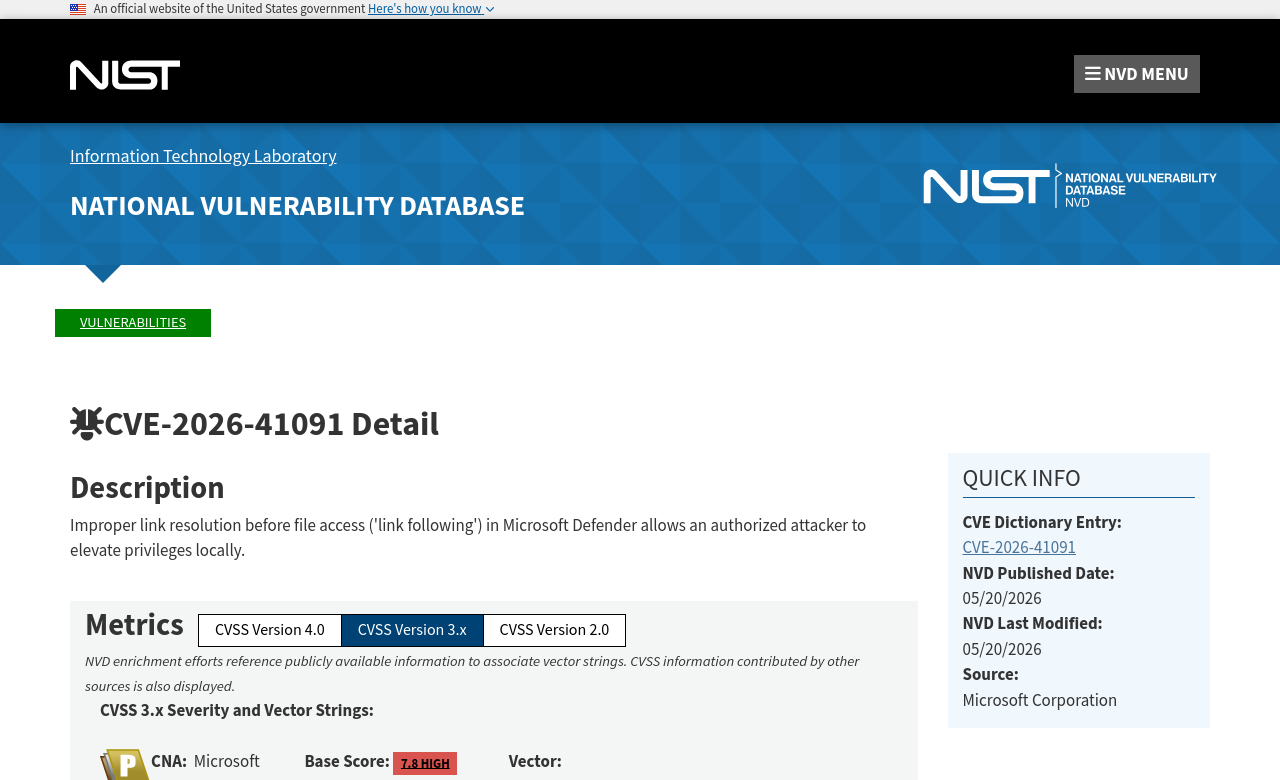
CVE-2026-41091 is a Microsoft Defender elevation of privilege vulnerability, a critical flaw stemming from improper link resolution before file access (see NVD). Successful exploitation of this vulnerability could grant an attacker SYSTEM privileges on an affected system. It impacts the Microsoft Malware Protection Engine up to version 1.1.26030.3008.
The second critical flaw, CVE-2026-45498, is a denial-of-service (DoS) vulnerability impacting Microsoft Defender (details on NVD). This DoS vulnerability affects the Defender Antimalware Platform up to version 4.18, allowing an attacker to disable or degrade critical endpoint protection services.
Why It Matters
These zero-day exploits are dangerous because attackers used them before patches or mitigations were widely available, leaving organizations exposed. CISA highlights such vulnerabilities are frequent attack vectors for malicious cyber actors and pose significant risks, especially given Defender's ubiquitous presence.
Attackers can use elevation of privilege flaws like CVE-2026-41091 to gain deep, persistent access to affected systems. This can lead to broader breaches, ransomware deployments, and data theft, completely bypassing traditional user-level controls. A system running with SYSTEM privileges is essentially owned by the attacker.
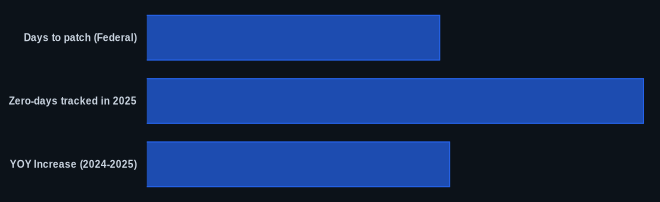
Google's Threat Intelligence Group tracked 90 actively exploited zero-days in 2025, a 15% increase from 2024. This isn't just a concern for high-value targets; historically, nation-state actors use zero-days that can later be incorporated into ransomware kits and commodity malware targeting smaller businesses.
A functional DoS against Defender via CVE-2026-45498 creates a critical window of opportunity. It lets attackers disable an organization's primary line of endpoint defense, clearing the way for secondary payloads or lateral movement without detection. This directly degrades the security posture. For example, groups like LockBit or BlackCat use similar tactics to evade EDR solutions.
Affected Scope & Remediation
The impact radius for these vulnerabilities is substantial given Microsoft Defender's widespread deployment across Windows ecosystems. Organizations running affected versions of the Microsoft Malware Protection Engine and the Defender Antimalware Platform are immediately exposed. Federal agencies, per CISA, must apply mitigations for these flaws by June 3, 2026. This tight deadline shows the urgency.
For CVE-2026-41091, the Microsoft Malware Protection Engine up to version 1.1.26030.3008 is vulnerable. For CVE-2026-45498, the Defender Antimalware Platform up to version 4.18 is affected. Microsoft is pushing emergency updates.
Your immediate priority is to ensure your Microsoft Defender installations are updated. Given Defender's update mechanism, many systems should receive these patches automatically. However, do not assume; verify. Mandate a scan of your estate for affected versions. Tools like CrowdStrike Falcon or SentinelOne can provide endpoint visibility to quickly identify vulnerable systems even before the Defender patch fully deploys.
| Product | Affected Version Range | Fixed Version |
|---|---|---|
| Microsoft Malware Protection Engine | Up to 1.1.26030.3008 | 1.1.26030.3009 or later (per Microsoft) |
| Defender Antimalware Platform | Up to 4.18 | 4.18.2603.3009 or later (per Microsoft) |
Patch Links:
Microsoft provides no official workarounds beyond applying the updates. The timeline between disclosure and exploitation was effectively zero; the researcher made the details public while threat actors were already using them, according to BleepingComputer and The Hacker News. The CISA KEV deadline for federal agencies to remediate is June 3, 2026, giving them approximately 13 days from the KEV listing.
Technical Breakdown
CVE-2026-41091 is an elevation of privilege (EoP) vulnerability rooted in improper link resolution. An attacker tricks Defender into opening a seemingly harmless door (a symbolic link or junction point) that points to a sensitive system file or directory. Defender, following its legitimate procedures to access the "harmless" location, inadvertently gains access to or modifies the vault's contents with its own high-level permissions. This is a common pattern in Windows privilege escalation.
Specifically, the vulnerability allows an attacker with low-level access to the system to craft a malicious symbolic link. When the Microsoft Malware Protection Engine attempts to perform an operation (like scanning or cleaning) on a file path that includes this link, it resolves the link incorrectly. This leads to the engine operating on an unintended, protected system resource with its own elevated privileges, effectively granting the attacker SYSTEM-level control. This bypasses typical access control mechanisms.
CVE-2026-45498, the denial-of-service, is simpler but equally disruptive. It likely involves malformed input or a specific sequence of operations that causes the Defender Antimalware Platform to crash or enter an unresponsive state. An attacker could leverage this to disable a critical defensive component.
An attacker could use CVE-2026-41091 for T1068 Exploitation for Privilege Escalation. Once SYSTEM access is achieved, an attacker might move to T1003 OS Credential Dumping, specifically T1003.001 LSASS Memory, to extract credentials for lateral movement or persistence. The CVE-2026-45498 DoS could be used in conjunction with this, as part of T1562.001 Disable or Modify Tools, to blind the endpoint before the privilege escalation attempt or subsequent actions.
From a control perspective, this directly implicates SI-2 Flaw Remediation for timely patching and SI-3 Malicious Code Protection for the efficacy of the antimalware engine. Organizations also need to consider AC-6 Least Privilege, ensuring that even when an engine runs with high privileges, its operational scope is minimized to prevent such abuses.
Historical Context
Uncoordinated disclosure and rapid exploitation of critical vulnerabilities aren't new. A notable parallel can be drawn to the PrintNightmare vulnerabilities (CVE-2021-34527) around July 2021. In that instance, a researcher also inadvertently published exploit code, leading to widespread, active exploitation before a comprehensive patch was available.
Similar to the current Defender zero-days, PrintNightmare was an elevation of privilege flaw (and later remote code execution) that granted SYSTEM privileges, severely impacting Windows environments. The key difference was the initial intent; PrintNightmare's disclosure was a mistake in the timing of a POC release, not a deliberate, retaliatory campaign.
Both scenarios highlight the critical race between vulnerability disclosure, patch development, and active exploitation. When vulnerabilities like CVE-2026-41091 and CVE-2026-45498 are exposed prematurely, it creates an immediate, severe window of risk that security teams must contend with. The speed at which these Defender zero-days were used by actors, some linked to Russian infrastructure, mirrors the agility seen with PrintNightmare, which was quickly integrated into various attack chains.
Data at a Glance
| Metric | Value | Source |
|---|---|---|
| CISA KEV Listing Date | May 21, 2026 | CISA KEV Catalog |
| CISA KEV Remediation Deadline | June 3, 2026 | CISA KEV Catalog |
| Days to patch (Federal) | 13 days | CISA KEV Catalog |
| CVE-2026-41091 Severity | Privilege Escalation | NVD |
| CVE-2026-45498 Severity | Denial of Service | NVD |
| Actively Exploited | Yes | BleepingComputer, The Hacker News |
| Zero-days tracked in 2025 | 90 | Google Threat Intelligence Group (cited by The Hacker News) |
| YOY Increase (2024-2025) | 15% | Google Threat Intelligence Group (cited by The Hacker News) |
Our Take
These zero-days are a mess, primarily due to the uncoordinated disclosure. While researchers have legitimate grievances, weaponizing zero-days like this puts everyone at risk, not just Microsoft. It's a direct gift to threat actors. The fact that groups linked to Russian infrastructure are already using these exploits confirms this isn't just an academic exercise. Focus on your endpoints. Your EDR, like CrowdStrike Falcon, should be signaling unusual activity, but nothing beats a prompt, verified patch.
The CVEDaily Take
This incident highlights that the stated motivations of the researcher, 'Chaotic Eclipse,' don't fully align with the impact. While claiming grievances against Microsoft's vulnerability disclosure process, the uncoordinated release has primarily empowered state-sponsored actors, some linked to Russian infrastructure, to immediately compromise widespread Microsoft Defender installations. We believe Microsoft's criticism of 'unnecessary risk' is understated; this was a direct enabler for active, nation-state exploitation. The incident underscores that the "bug bounty ethics" debate often ignores the immediate operational impact when uncoordinated disclosures enable advanced persistent threats.
What internal process changes has your team implemented to automatically detect and deploy emergency out-of-band Defender updates?
FAQ
Q: What versions of Microsoft Defender are affected by CVE-2026-41091 and CVE-2026-45498?
A: CVE-2026-41091 affects the Microsoft Malware Protection Engine up to version 1.1.26030.3008. CVE-2026-45498 affects the Defender Antimalware Platform up to version 4.18. You need to update to 1.1.26030.3009 or later for the Engine and 4.18.2603.3009 or later for the Platform.
Q: Are there any specific mitigations or workarounds if we can't patch immediately?
A: Microsoft has not provided any specific workarounds beyond applying the emergency updates. Due to active exploitation and the nature of the vulnerabilities (privilege escalation to SYSTEM and DoS of the antimalware engine), immediate patching is the only recommended mitigation. Maintain strong network segmentation and monitor endpoint activity aggressively.
Q: How quickly were these vulnerabilities exploited after disclosure?
A: The vulnerabilities were already actively exploited at the time of the public disclosure by 'Chaotic Eclipse', effectively giving organizations zero lead time to prepare. CISA added them to its KEV catalog the same day Microsoft confirmed active exploitation on May 21, 2026.