
The Qilin ransomware gang is actively exploiting a critical vulnerability in Palo Alto Networks GlobalProtect VPN, establishing initial access to victim networks for their signature double extortion schemes. This exploitation was first reported by BleepingComputer within the last 48 hours as of July 21, 2026, making immediate patching an urgent requirement for any organization running unpatched instances. We are seeing active compromise in the wild.
What Happened
BleepingComputer publicly reported active exploitation of a critical Palo Alto Networks GlobalProtect VPN vulnerability by the Qilin ransomware gang on July 21, 2026. This bug provides Qilin with an initial access vector, allowing them to bypass traditional perimeter defenses and gain a foothold inside target networks. Specific technical details, including the CVE ID, CVSS score, and precise affected versions, are still pending official disclosure from Palo Alto Networks.
Qilin, also known as Agenda, is notorious for its double extortion tactics. They prioritize exfiltrating sensitive corporate data—financial records, intellectual property, PII, and customer data—before proceeding with encryption. This strategic approach maximizes their leverage during ransom negotiations, often resulting in demands escalating into millions of dollars, according to historical reporting. Organizations using unpatched GlobalProtect VPNs are now directly in their crosshairs.
Why It Matters
Unpatched Palo Alto Networks GlobalProtect VPN instances are now immediate targets for Qilin ransomware, shifting this vulnerability from a theoretical risk to an active, demonstrable threat. Qilin uses this critical bug to achieve initial access, sidestepping defenses typically designed to protect network perimeters. Once inside, they move quickly.
Their operational model of double extortion ensures maximum impact: data exfiltration precedes encryption. We've seen past Qilin attacks result in compromised financial records, intellectual property, and extensive PII exposure. The financial implications alone, with ransom demands often in the millions of dollars, are severe. Organizations relying on GlobalProtect for remote access must prioritize this.
Affected Scope & Remediation
The primary affected entities are organizations operating unpatched instances of Palo Alto Networks GlobalProtect VPN. Given the lack of a publicly disclosed CVE ID and specific version details as of this report, we're assuming all currently unpatched versions are potentially vulnerable. This is bad.
Immediate action means applying the latest available patches from Palo Alto Networks. While a specific advisory isn't yet public for this exact vulnerability, their regular updates address critical security issues. Failing that, consider temporarily disabling external access to GlobalProtect until patching can be verified.
As a compensating control, implementing a Cloudflare Zero Trust architecture can significantly reduce the attack surface by ensuring all access requests are authenticated and authorized regardless of network location, rather than implicitly trusting VPN connections. For organizations that cannot patch immediately, strict network segmentation and strong endpoint detection and response (EDR) solutions are essential.
Here's what we know about the affected scope and initial remediation steps:
| Product | Version Range | Fixed Version | Source |
|---|---|---|---|
| Palo Alto GlobalProtect VPN | All unpatched versions affected | Apply latest available patch | BleepingComputer |
| Patch Link: | Official vendor advisory pending CVE disclosure | N/A | Palo Alto Networks Support Portal |
| NVD Entry: | CVE ID not yet public | N/A | N/A |
| CISA KEV Entry: | Not yet listed | N/A | N/A |
| Exploitation Report: | Active since July 2026 | N/A | BleepingComputer |
For workarounds, implement strong multi-factor authentication (MFA) on all VPN access points if not already in place, and enforce least privilege principles for VPN users. Monitor VPN logs aggressively for anomalous activity—failed logins, unusual access patterns, or connections from unexpected geo-locations. Implement rate limiting on VPN login attempts if possible. Beyond patching, ensuring your endpoint detection and response (EDR) agents are fully deployed and up-to-date across all connected devices is essential, as they provide a crucial last line of defense against post-exploitation activity. Think of this as defense in depth, even after the front door is compromised.
Timeline:
- Active Exploitation Reported: On or before July 21, 2026 (BleepingComputer).
- Vulnerability Disclosure: Pending official vendor advisory.
- Patch Release: Pending official vendor advisory.
Technical Breakdown
The critical vulnerability in Palo Alto Networks GlobalProtect VPN acts as a direct conduit for Qilin ransomware to bypass the network perimeter. Think of your VPN as a heavily fortified drawbridge that lets authorized users into your castle. This vulnerability is like a flaw in the drawbridge's control mechanism that allows an attacker to simply lower it without credentials, walking straight into the courtyard. It grants initial access (MITRE ATT&CK: T1190 Exploit Public-Facing Application), negating the entire purpose of a perimeter defense.
This initial access bypasses the fundamental assumption of your perimeter security: that only authorized users or systems can cross the boundary. Once Qilin has a foothold, their usual playbook involves reconnaissance to map the internal network, identify critical assets, and locate data stores. They often use tools for OS credential dumping (MITRE ATT&CK: T1003 OS Credential Dumping) to gain administrative access or valid accounts (MITRE ATT&CK: T1078 Valid Accounts) within the environment, facilitating lateral movement and ultimately the deployment of their ransomware payload. This sequence of actions rapidly escalates the threat from initial breach to full network compromise.
Once inside, Qilin shifts tactics. Their primary objective often involves lateral movement and privilege escalation to locate and exfiltrate high-value data (MITRE ATT&CK: T1041 Exfiltration Over C2 Channel). This "double extortion" strategy relies on stealing sensitive information—like financial records or intellectual property—before deploying encryption. They then encrypt critical systems (MITRE ATT&CK: T1486 Data Encrypted for Impact), demanding a ransom for decryption keys and promising not to leak the stolen data. Effective post-exploitation detection is essential here. Tools like CrowdStrike Falcon can help identify suspicious behaviors, such as unexpected process execution, lateral movement attempts, or data staging, which might indicate Qilin’s presence even if the initial breach was silent. Without specific CVE details, our focus is on rapid patching (NIST SP 800-53: SI-2 Flaw Remediation) and bolstering remote access controls (NIST SP 800-53: AC-17 Remote Access). Incident handling procedures (NIST SP 800-53: IR-4 Incident Handling) are paramount, because if this is exploited, you're already responding.
Historical Context
The Qilin ransomware gang, also operating under the moniker Agenda, isn't new to high-impact attacks. They gained significant notoriety in 2023 for targeting diverse sectors, including manufacturing and automotive, consistently employing their double extortion model. We saw them hit organizations like Yanfeng Automotive Interiors, a major automotive supplier, in 2023, demonstrating their capacity for disruption.
This current exploitation of a critical VPN vulnerability echoes past incidents where other prominent ransomware groups used similar perimeter bypasses. Remember the widespread exploitation of vulnerabilities in Fortinet FortiGate VPNs (e.g., CVE-2023-27997) or Pulse Secure VPNs (CVE-2019-11510) by various state-sponsored and criminal groups. The core similarity is the reliance on a single, critical public-facing component for initial access. The difference here is the immediate, aggressive use by a prolific ransomware group targeting a widely deployed enterprise VPN, demanding an urgent response before specific CVE details are even fully public.
Data at a Glance
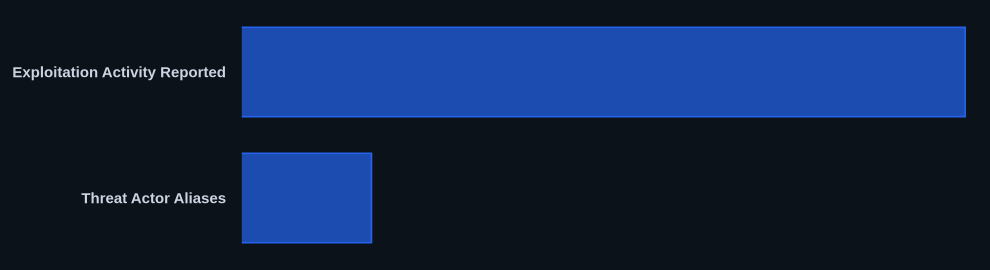
| Metric | Value | Source |
|---|---|---|
| Exploitation Activity Reported | 48 hours | BleepingComputer |
| Qilin Ransom Demands (avg.) | $ millions | BleepingComputer |
| Threat Actor Aliases | 1 (Qilin/Agenda) | BleepingComputer |
| Qilin Active Since | 2023 | BleepingComputer |
| Attack Type | Double Extortion | BleepingComputer |
Our Take
This situation demonstrates that critical VPN vulnerabilities are consistently a prime target for initial access. We cannot wait for a CVE or patch; the threat is present now. Proactive monitoring of GlobalProtect logs, combined with network segmentation and a strong EDR solution, becomes the immediate lifeline. Assume compromise, verify everything.
The CVEDaily Take
The lack of a public CVE despite active exploitation amplifies the risk, forcing organizations into a reactive stance without full visibility. We think Palo Alto Networks should expedite public disclosure of the CVE and patch details to provide immediate guidance. This incident highlights the need for continuous perimeter monitoring. Has your team already scanned your perimeter for active GlobalProtect instances, and verified their patching status?
FAQ
Q: Is there a CVE ID for this Palo Alto GlobalProtect vulnerability?
A: As of the exploitation report on July 21, 2026, a specific CVE ID for this critical GlobalProtect VPN vulnerability has not yet been publicly disclosed by Palo Alto Networks.
Q: What immediate steps should our security team take?
A: Immediately apply any available patches for Palo Alto Networks GlobalProtect VPN. If a patch specific to this vulnerability isn't released, review all other recent updates. Implement strong MFA, segment network access, and actively monitor VPN logs for any unusual activity or unauthorized connections. Consider disabling external access temporarily if patching isn't feasible and you lack sufficient compensating controls.
Q: How does the Qilin ransomware gang typically operate after gaining initial access via a VPN vulnerability?
A: After exploiting the VPN to gain initial access, Qilin typically focuses on lateral movement, privilege escalation, and data exfiltration (double extortion). They'll steal sensitive data from your network before encrypting systems and demanding a ransom for both data recovery and non-publication.