How to Detect Advanced Persistent Threat: Attack Chain, Warning Signs & Defense Playbook (2026)
Global cyberattacks average 2,090 per week in 2026, a 17% increase over 2025, with sophisticated Advanced Persistent Threats (APTs) often hiding in plain sight for months, according to Check Point. Detecting these covert operations means looking beyond typical malware signatures; you've got to spot the subtle behavioral anomalies and the abnormal use of legitimate tools before they cause significant damage. This guide gives you specific detection signals, a detailed attack chain breakdown, and a practical defense playbook to strengthen your defenses against the most patient and dangerous threat actors.
How Advanced Persistent Threat Works: The Attack Chain
An APT isn't a smash-and-grab; it's a long-term, deliberate campaign, like a master forger meticulously studying a painting for months before attempting a precise replica. They're not looking to trigger loud alarms; they want to blend in, learn your network, and achieve a specific strategic goal over an extended period, which UpGuard estimates can be 91 days or more. This requires a methodical, multi-stage approach, often mirroring the MITRE ATT&CK framework.
1. Reconnaissance (TA0043)
Attackers start by gathering intelligence on your organization, employees, and infrastructure. This phase involves extensive Open-Source Intelligence (OSINT) and network scanning to identify potential entry points and weak links.
2. Initial Access (TA0001)
This is where they first breach your perimeter. Common methods include Spear Phishing (T1566.001), often enhanced by AI to create highly convincing lures, according to TechRepublic, or exploiting public-facing applications (T1190) through unpatched vulnerabilities. We're also seeing a rise in Supply Chain Compromise 2.0, where attackers compromise a trusted vendor to gain access to your network, or simply use compromised credentials (T1078), as ZDNet reports.
3. Execution (TA0002) & Persistence (TA0003)
Once inside, they execute their initial payload and establish a foothold. This might involve deploying backdoors or Remote Access Trojans (RATs) to maintain access (T1546, T1053). They'll often create scheduled tasks (T1053.005) or establish cloud persistence (T1578) to survive reboots or detection, acting like a hidden key they can use to re-enter at any time.
4. Privilege Escalation (TA0004) & Defense Evasion (TA0005)
APTs then seek higher privileges, often by exploiting local vulnerabilities (T1068) or harvesting credentials (T1003). They'll move laterally (TA0008) across the network, carefully blending into normal traffic, like a shadow moving through a busy crowd. Attackers frequently obfuscate files or information (T1027) and impair your defenses (T1562) by disabling security tools or deleting logs.
5. Credential Access (TA0006)
This phase focuses on stealing user credentials, often through techniques like Mimikatz or by dumping Local Security Authority Subsystem Service (LSASS) memory. They need these credentials to expand their access without triggering alarms.
6. Collection (TA0009)
With elevated privileges and widespread access, attackers identify and gather high-value data. This often involves staging the data in unusual file formats or compressed archives within temporary directories, making it easy to exfiltrate later.
7. Exfiltration (TA0010)
Finally, the collected data is covertly transferred out of your network. This might involve encrypting the data, breaking it into smaller chunks, and using uncommon ports or protocols to bypass firewalls (T1041, T1048). Sometimes, they'll even launch a distraction, like a Denial-of-Service (DoS) attack (T1499), to mask the data transfer.
8. Impact (TA0011)
The ultimate goal can vary from operational disruption, as seen in the Boston Scientific incident, to data leaks, ransomware deployment (T1486), or sabotage (T1490). The impact often reveals the APT's true objective after a long period of quiet activity.
Advanced Persistent Threat Variants and Types
APTs aren't monolithic; they're tailored campaigns driven by specific motivations, resulting in distinct attack profiles. Understanding these variants helps refine your detection and defense strategies.
State-Sponsored Espionage
These APTs are funded and directed by national governments, often focusing on geopolitical intelligence, military secrets, and intellectual property theft. They're characterized by the use of custom, sophisticated malware and zero-day exploits. For example, Microsoft reported that China-nexus APT groups frequently target critical infrastructure and technology companies for long-term espionage objectives, as observed in the exploitation of a VMware vCenter flaw in August 2026.
eCrime for Financial Gain
While many eCrime groups are opportunistic, some operate with the persistence and stealth of APTs to achieve long-term financial exploitation. They might steal vast amounts of financial data, market-sensitive information, or credentials for future monetization. These groups often employ sophisticated phishing and supply chain compromise tactics.
Disruptive/Destructive Attacks
These APTs aim to pre-position themselves within critical infrastructure or key organizations for potential sabotage or operational disruption during future geopolitical crises. Their focus is less on data theft and more on the ability to cause widespread damage, as exemplified by the Boston Scientific network outage in August 2026, which the company confirmed was a cybersecurity incident but has not attributed to a specific group or confirmed data impact, according to Boston Scientific. CrowdStrike reports that Russian APTs, for instance, frequently target energy and logistics sectors for this purpose.
How to Detect Advanced Persistent Threat: Warning Signs and IOCs
Detecting APTs means looking for subtle deviations from your baseline, not just high-volume alerts. Focus on behavioral anomalies and the misuse of legitimate tools.
Endpoint Indicators
Look for unusual user account activity, especially high-level logins at odd hours or from unusual geographical locations (Windows Event ID 4624). Pay close attention to multiple failed login attempts (Event ID 4625). An EDR platform like CrowdStrike Falcon excels at flagging these subtle anomalies, such as Living-off-the-Land Plus (LoL+) techniques where legitimate system tools (e.g., PowerShell, bitsadmin, certutil) are used for malicious purposes. Look for process creation (Event ID 4688) with unusual parameters, like powershell.exe executing base64-encoded commands or attempting to access network shares from a user's desktop application. Scheduled task creation (Event ID 4698) by non-admin users or tasks running unusual executables is another strong signal. PowerShell script block logging (Event ID 4104) is critical; look for Invoke-Expression or IEX with web requests, or DownloadFile activity.
Network Indicators
Monitor for unusual C2 communications. This includes traffic to known suspicious IPs or domains from integrated threat intelligence feeds. Also, watch for sudden data spikes or unexpected data transfers, particularly from unusual internal hosts to external destinations or cloud storage services. APTs often use uncommon ports or protocols (e.g., DNS tunneling, ICMP tunneling, or legitimate protocols like HTTPS but with unusual session lengths or data volumes) to blend in. Any deviation from baseline network behavior – like an HR workstation suddenly communicating with a domain controller in an unexpected way – warrants immediate investigation.
SIEM Detection
Correlate logs to uncover the narrative of an APT. A SIEM solution can correlate Windows Event IDs with network flow data. For instance, you could implement a rule in Splunk (or similar) to detect suspicious login patterns:
index=windows (EventCode=4625 OR EventCode=4624) | stats count by EventCode, TargetUserName, IpAddress, LogonType | where (EventCode=4625 AND count > 5 AND NOT IpAddress IN (your_trusted_ip_ranges)) OR (EventCode=4624 AND LogonType=10 AND NOT IpAddress IN (your_trusted_geo_locations))
This query identifies multiple failed logins or interactive logins from outside your trusted network. Another example targets LoL+ activity:
index=windows EventCode=4104 ScriptBlockText IN ("*Invoke-WebRequest*", "*DownloadString*", "*IEX*", "*system.net.webclient*") AND NOT (User IN (privileged_accounts_with_justification))
This helps catch suspicious PowerShell activity. Integrating threat intelligence feeds into your SIEM is also crucial; for example, setting alerts when internal IPs communicate with known C2 servers from Mandiant's APT groups threat landscape or Unit 42's APT overview.
Response Playbook: What to Do When Advanced Persistent Threat Hits
When you've confirmed an APT intrusion, you don't have time for hesitation. You need an immediate, surgical response. The average data breach cost reached an all-time high of $10.22 million in the U.S. in 2026, largely due to high containment costs and strict regulations, according to Statista, making rapid response critical.
Phase 1: Immediate Containment (first 15 minutes)
- Isolate Affected Systems: Disconnect compromised hosts from the network. Use EDR/XDR solutions to instantly quarantine endpoints. Don't pull the power cord unless absolutely necessary for forensic preservation; a clean shutdown is better for capturing memory.
- Lockdown/Reset Compromised Accounts: Immediately reset passwords for any compromised user accounts and enforce Multi-Factor Authentication (MFA) across all affected accounts. For high-privilege accounts, temporarily disable them.
- Block C2 Channels: Update firewalls, IPS, and proxy servers to block known APT Command and Control (C2) domains, IP addresses, and suspicious outbound traffic.
Phase 2: Forensic Preservation
- Create Forensic Disk Images: Use tools like FTK Imager or Paladin to create bit-for-bit forensic copies of affected systems' disks. Crucially, collect volatile memory (RAM) using tools like WinPmem or DumpIt before system shutdown, as APTs often store artifacts only in memory.
- Collect All Relevant Logs: Gather all available logs from endpoints (e.g., Windows Event Logs 4624, 4625, 4688, 4104), network devices (firewalls, routers, proxies), and applications. Consolidate these in your SIEM.
- Maintain Chain of Custody: Document every step of the collection and analysis process. This is vital for legal or regulatory requirements, especially with a potential average data breach cost of $4.88 million globally, Statista reports.
Phase 3: Recovery and Hardening
- Eradication: Thoroughly remove all malicious artifacts, backdoors, and persistence mechanisms identified during forensics. This often means rebuilding systems from trusted images.
- Validation: Verify that all traces of the APT are gone. Conduct proactive threat hunts using newly discovered IOCs and behavioral patterns.
- Rebuild/Restore: Restore services and data from verified clean backups. Ensure the integrity of restored data.
- Hardening: Implement enhanced security controls based on lessons learned. This includes patching exploited vulnerabilities (e.g., the CVE-2026-59310 flaw), reinforcing network segmentation, and strengthening IAM policies.
- Post-Incident Review: Conduct a detailed review with all stakeholders. Document what happened, how it was handled, and what needs to improve to prevent recurrence.
How to Prevent Advanced Persistent Threat: Controls That Work
Preventing APTs requires a layered, proactive defense focused on making it as difficult and costly as possible for attackers to achieve their goals. A strong framework starts with controls from NIST SP 800-53 and CIS Controls.
Identity and Access Management
Implement access controls and the principle of least privilege (NIST SP 800-53 AC-3, AC-6). Continuously verify user and device identities, enforcing a Zero Trust architecture. Ensure strong passwords and Multi-Factor Authentication (MFA) for all accounts, especially privileged ones. Solutions like YubiKey for hardware MFA can significantly reduce credential-based attacks. Regularly review permissions (NIST SP 800-53 AC-2).
- MITRE ATT&CK Mitigations: T1078 (Valid Accounts), T1110 (Brute Force), T1567 (Exfiltration Over Web Service).
Patching & Vulnerability Management
Establish a continuous vulnerability monitoring and scanning program (NIST SP 800-53 RA-5). Prioritize and apply patches promptly for all operating systems, applications, and firmware (NIST SP 800-53 SI-2). APTs frequently exploit known, unpatched vulnerabilities, as seen with the VMware vCenter flaw (CVE-2026-59310).
- MITRE ATT&CK Mitigations: T1190 (Exploit Public-Facing Application), T1068 (Exploitation for Privilege Escalation).
Network Security and Segmentation
Deploy micro-segmentation to limit lateral movement and isolate critical systems (NIST SP 800-53 SC-7). Implement firewalls and intrusion prevention systems at network boundaries and within segments. Monitor internal network traffic for anomalies that indicate lateral movement (T1021.001, T1041).
- MITRE ATT&CK Mitigations: T1041 (Exfiltration Over Network Medium), T1021.001 (Remote Desktop Protocol).
Endpoint Protection
Utilize EDR and next-gen antivirus solutions that provide continuous endpoint monitoring, behavioral analysis, and automated response (NIST SP 800-53 SI-3). Ensure these tools are updated with the latest threat intelligence. Configure strict controls over process creation (Event ID 4688) and PowerShell execution (Event ID 4104).
- MITRE ATT&CK Mitigations: T1059.001 (PowerShell), T1055 (Process Injection), T1203 (Exploitation for Client Execution).
Security Awareness Training
Provide specialized training on spear phishing and social engineering techniques for all employees (NIST SP 800-53 AT-2). Emphasize how to identify and report suspicious emails, links, and attachments, particularly with AI-powered phishing attacks forecasted to cross 42% of all global intrusions by late 2026.
- MITRE ATT&CK Mitigations: T1566.001 (Spearphishing Attachment), T1566.002 (Spearphishing Link), T1204.002 (Malicious File).
Continuous Monitoring and Logging
Implement comprehensive event logging (NIST SP 800-53 AU-2) and AI/ML-driven continuous monitoring of network traffic, user behavior, and system activity (NIST SP 800-53 AU-6, SI-4, CA-7). Establish baselines and configure alerts for any significant deviations that might indicate an APT.
- MITRE ATT&CK Mitigations: T1070 (Indicator Removal on Host), T1562.001 (Disable or Modify System Firewall).
Supply Chain Risk Management
Conduct thorough vendor risk assessments and establish clear security requirements for all third parties (NIST SP 800-53 SR-2). Continuously monitor the security posture of your supply chain, especially as Supply Chain Compromise 2.0 becomes a dominant attack vector.
- MITRE ATT&CK Mitigations: T1195.002 (Supply Chain Compromise: Compromise Software Supply Chain).
Real-World Incidents
APT activity has significantly increased in frequency and sophistication, leaving a trail of costly and disruptive incidents over the last few years.
VMware vCenter Flaw Exploitation (August 2026)
In August 2026, a suspected China-nexus APT group actively exploited a critical vulnerability, CVE-2026-59310, in Broadcom VMware vCenter Server. The flaw allowed for arbitrary code execution on vulnerable servers. Post-exploitation, the attackers deployed a Babuk-derived ransomware, characterized by Chinese-language artifacts, highlighting the dual threat of espionage and financial gain from these groups. This attack demonstrates how APTs quickly weaponize newly disclosed vulnerabilities, even before widespread patching. The lesson here is the critical need for immediate patching of public-facing applications and the deployment of network segmentation to limit the reach of such exploits.
Klue-Salesforce OAuth Token Breach (June 2026)
Between June 11-12, 2026, attackers gained unauthorized access to Klue's integration environment by using compromised legacy credentials. This initial access allowed them to obtain OAuth tokens, which were then used to access customer Salesforce CRM platforms. The incident resulted in unauthorized data access across multiple customer environments; Klue confirmed the unauthorized access and data impact, but did not attribute it to a specific APT group. The critical lesson is the absolute necessity of MFA enforcement and password rotation for all accounts, and continuous auditing of third-party access and OAuth token lifecycles, especially in integration environments.
Boston Scientific Cyber Incident (August 2026)
In August 2026, medical technology giant Boston Scientific experienced a global network outage that significantly disrupted its operations, limiting access to critical systems and applications. The company confirmed a cybersecurity incident, but details regarding attribution and specific data impact remained unconfirmed at the time of publication. This incident, however, illustrates the operational disruption and potential for sabotage that APTs can achieve, particularly against critical infrastructure and the highly targeted healthcare industry. The extended operational disruption points to a sophisticated intrusion and the potential for a pre-positioned threat designed for impact rather than just data exfiltration. The key lesson for security teams is that an APT's objective might not always be immediately obvious. You need resilience planning and strong detection for unusual internal network behavior, not just perimeter breaches, to counter long-term threats aiming for future impact.
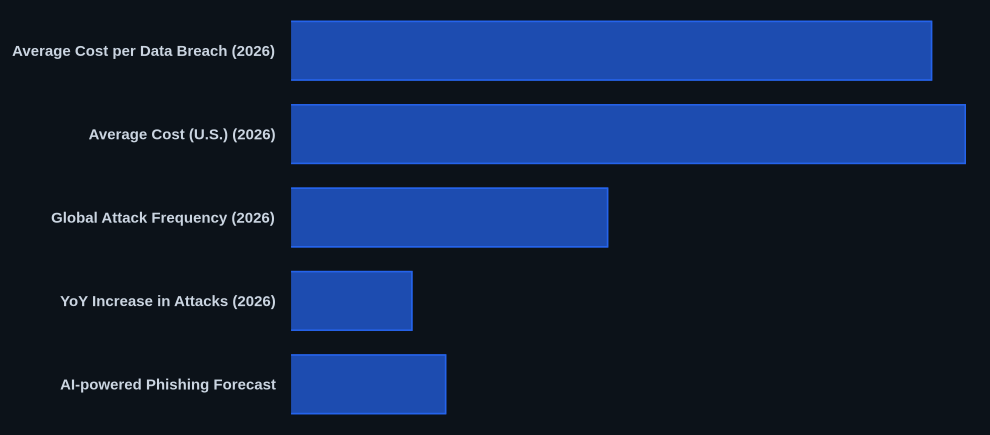
Data at a Glance
| Metric | Value | Source |
|---|---|---|
| Average Cost per Data Breach (2026) | $4.88 million | Statista |
| Average Cost (U.S.) (2026) | $10.22 million | Statista |
| Global Attack Frequency (2026) | 2,090 attacks/week | Check Point |
| YoY Increase in Attacks (2026) | 17% | Check Point |
| AI-powered Phishing Forecast | 42% of intrusions (late 2026) | TechRepublic |
| Identity Weakness Factor (2025) | Almost 90% of investigations | Palo Alto Networks Unit 42 (referring to Unit 42 investigations data) |
| Average Breach Duration | > 91 days | UpGuard |
| Healthcare Breach Cost (2026) | Up to $12.6 million | DarkReading (referring to some 2026 estimates for healthcare, often highest breach cost industry) |
The CVEDaily Take
We think the unconfirmed attribution in the Boston Scientific incident is noteworthy. The company confirmed an incident and service disruption, but not the specific actor or data impact, which can sometimes indicate a desire to control the narrative or that attribution is genuinely difficult. Given the nature of APTs to hide in plain sight and the specific targeting of the healthcare sector, it's likely a state-sponsored or financially motivated APT, but the lack of specifics leaves room for speculation about the true extent of the intrusion. What's one unexpected network behavior that your security team would immediately investigate, even if it uses only legitimate tools and protocols?
Tools & Resources
Equipping your team with the right tools is essential for detecting and responding to APTs effectively. These are the workhorses security engineers rely on.
Detection (EDR/SIEM)
- CrowdStrike Falcon: An industry-leading Endpoint Detection and Response (EDR) platform that provides continuous monitoring, behavioral analytics, and threat intelligence to identify subtle anomalies and Living-off-the-Land techniques that often signal APT activity. CrowdStrike Falcon
- Splunk Enterprise Security (ES): A powerful SIEM that aggregates logs from across your infrastructure, enabling correlation of diverse event data (e.g., Windows Event IDs 4624, 4688, network flow) to identify complex APT attack chains and C2 communications. Splunk ES
Prevention (Controls/Hardening)
- Veeam Backup & Replication: Crucial for data recovery and business continuity. In case of destructive APT attacks or ransomware (T1486), Veeam ensures you can restore clean data quickly, minimizing downtime and impact. Veeam
- YubiKey: A hardware security key that provides strong, phishing-resistant Multi-Factor Authentication (MFA) for privileged accounts, significantly reducing the risk of compromised credentials (T1078) and initial access via phishing attempts. YubiKey
Incident Response (Forensics/Containment)
- Velociraptor: An open-source, advanced digital forensics and incident response (DFIR) tool that allows for rapid collection of forensic artifacts (memory, disk, registry) across endpoints, invaluable for initial containment and in-depth analysis of APT compromises. Velociraptor
- Wireshark: A widely used network protocol analyzer that helps security teams inspect network traffic at a granular level, revealing unusual C2 communications, exfiltration attempts (T1041), and other network-based indicators of APT activity. Wireshark
FAQ
Q: How to detect advanced persistent threat?
A: Focus on subtle behavioral anomalies like high-level logins at odd hours (Windows Event ID 4624), PowerShell executing suspicious commands with Event ID 4104, and unusual outbound network traffic to rare ports or external IPs.
Q: How to respond to an advanced persistent threat attack?
A: Immediately isolate affected systems via EDR, lockdown and reset all compromised accounts (enforcing MFA), and block all identified Command and Control (C2) channels at your network perimeter.
Q: How to prevent advanced persistent threat?
A: Enforce Multi-Factor Authentication (MFA) and least privilege (NIST SP 800-53 AC-3) across all accounts, and maintain continuous vulnerability management and timely patching for all systems (NIST SP 800-53 SI-2).