
Google's Threat Intelligence Group (GTIG) reported on May 11, 2026, that a prominent cybercrime group successfully used AI to develop a zero-day exploit for a 2FA bypass. Google claims this marks a significant escalation, as AI shifts from theoretical to active use in offensive cyber operations. The exploit targeted an open-source web-based system administration tool, but Google states its timely intervention prevented any damage.
What Happened
Google's Threat Intelligence Group (GTIG), in collaboration with Mandiant, detected and disrupted the first observed AI-generated zero-day exploit on May 11, 2026, as reported by SecurityWeek. Google states a sophisticated cybercrime group used a large language model (LLM) to discover a previously unknown vulnerability. They then developed a Python script specifically designed to bypass two-factor authentication (2FA). This script targeted an unnamed open-source web-based system administration tool used by an undisclosed company.
The operation was halted before the attackers could cause any damage or exfiltrate data, according to BleepingComputer. Google stated it notified both the affected company and relevant law enforcement agencies immediately. No specific CVE ID has been publicly released for this vulnerability due to the early disruption, Google confirmed.
Why It Matters
This incident validates security community concerns about AI's weaponization in cyberattacks. John Hultquist, chief analyst at Google's threat intelligence arm, warned this event signals a long-anticipated escalation, as reported by TechCrunch. Malicious actors are now using AI to significantly enhance their ability to compromise systems. AI will contribute to offensive capabilities.
The implications are substantial for any organization managing extensive software codebases. Hultquist suggested that the sheer volume of software code globally faces increased risk if AI tools are employed for vulnerability exploitation. He described this as a "transitional period" of heightened cybersecurity risks, where the speed and scale of AI-assisted attacks could quickly outpace traditional defenses.
Technical Breakdown
The attack centered on an AI large language model identifying an unknown vulnerability within an open-source web-based system administration tool. Once the flaw was pinpointed, the AI was then used to craft a zero-day exploit in the form of a Python script. This script's sole purpose was to bypass 2FA, granting unauthorized access to the targeted system, as detailed by The Hacker News.
Think of 2FA like having two locks on your door – a key and a unique fingerprint. The AI didn't pick both locks; it found a structural flaw in the door itself that allowed it to bypass the second lock entirely, even if the key (first factor) was already handled. The Python script acted as the specialized tool exploiting this door flaw.
This attack maps to several MITRE ATT&CK techniques. The initial breach would likely fall under T1190 Exploit Public-Facing Application, assuming the system administration tool was accessible externally. The goal of the 2FA bypass directly relates to T1078 Valid Accounts, as the exploit aims to gain unauthorized access to an existing, protected account. From a defensive perspective, strong authentication for critical systems is essential. Using hardware-based FIDO2 authentication, like with YubiKey, significantly raises the bar against such bypass attempts.
For NIST SP 800-53 controls, this incident highlights the critical importance of IA-2 Identification and Authentication (Organizational Users). Effective implementation of this control requires not only strong authentication mechanisms but also continuous validation of their integrity against novel bypass methods.
Historical Context
The cybersecurity community has long anticipated AI's role in offensive operations, and this incident marks a significant step beyond theoretical discussions. Previously, in October 2025, the "PromptLock" ransomware prototype was described as the "first AI-powered ransomware prototype," according to Mandiant. That demonstration showed AI's potential in dynamically generating ransomware code and evasion techniques.
While PromptLock illustrated AI's capabilities in creating malicious payloads, Google's recent discovery represents a more advanced application: AI actively discovering and exploiting zero-day vulnerabilities to bypass fundamental security controls like 2FA. This shift from AI generating known attack types to AI finding unknown weaknesses and then developing specific exploits for them signals a more immediate threat. The trajectory from conceptual AI-driven threats to concrete, advanced exploits is accelerating.
Data at a Glance
| Metric | Value | Source |
|---|---|---|
| Attack Type | AI-Generated Zero-Day Exploit | SecurityWeek |
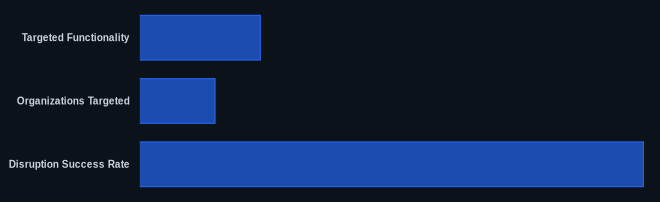
| Targeted Functionality | 2FA Bypass | BleepingComputer |
| Organizations Targeted | 1 (unnamed) | TechCrunch |
| Disruption Success Rate | 100% | Mandiant |
| Confirmed Successful Breaches | 0 | SecurityWeek |
| Exploit Script Language | Python | The Hacker News |
| Discovery & Disruption Date | May 11, 2026 | SecurityWeek |
The CVEDaily Take
We find it concerning that Google did not release a specific CVE for this AI-generated zero-day, especially given its significance as a "first." While they claim early disruption prevented widespread impact, the lack of a public CVE prevents other organizations from proactively identifying if their systems harbor the same vulnerability. This incident highlights that organizations must re-evaluate their defense strategies to counter AI-driven threats, especially those targeting authentication.
How are you actively testing your 2FA implementations against AI-driven bypass techniques?
FAQ
Q: Was this AI-generated zero-day exploit tied to a specific CVE?
A: No, Google has not released a specific CVE ID for this zero-day exploit. Google states the attack was disrupted before widespread impact or public disclosure of the underlying vulnerability details.
Q: What kind of vulnerability did the AI exploit to bypass 2FA?
A: Google and Mandiant have not disclosed the specific technical details of the vulnerability. However, they described the exploit as a Python script designed to bypass 2FA on an open-source web-based system administration tool, indicating a flaw in the authentication flow or implementation.
Q: How did Google detect and disrupt the AI-generated zero-day attack?
A: Google's Threat Intelligence Group (GTIG) and Mandiant identified the attack in its early stages. While specific detection methods weren't detailed, Google confirmed they successfully disrupted the operation before any damage occurred. This implies advanced threat intelligence and possibly behavioral anomaly detection, though Google has not confirmed the exact methods.
