
On May 4, 2026, Pennsylvania-based West Pharmaceutical Services detected a ransomware attack, leading to the immediate shutdown of affected on-premise infrastructure. This incident caused significant global operational disruption, and the company confirmed data exfiltration occurred prior to file encryption.
What Happened
On May 4, 2026, West Pharmaceutical Services proactively shut down and isolated its affected on-premise infrastructure after detecting a ransomware attack, as SecurityWeek reported, based on the company's SEC filing. The company confirmed that threat actors first exfiltrated data from its systems. Following this, the attackers deployed file-encrypting ransomware.
West Pharmaceutical Services has not publicly associated a specific CVE ID with this incident. The company has not disclosed the initial access vector or the name of the responsible ransomware group, as BleepingComputer noted. The company retained Palo Alto Networks' Unit 42 for incident response, including containment, system restoration, and a thorough investigation.
As of the reports, no specific Indicators of Compromise (IoCs) have been publicly released. By May 12, 2026, West Pharmaceutical Services announced via PRNewswire that its core enterprise systems were largely restored. Critical processes for shipping, receiving, and manufacturing had recommenced at some sites, with ongoing restoration at others. A definitive timeline for complete restoration across all operations has not yet been finalized, the company stated.
Why It Matters
This incident caused significant disruption across West Pharmaceutical Services' global business operations. While the full extent and specific types of exfiltrated data remain under investigation and undisclosed by the company, PRNewswire confirmed that the company stated data exfiltration occurred from its systems. West Pharma's statement about taking "steps intended to mitigate the risk of dissemination of the exfiltrated data" suggests potential engagement or negotiations with the attackers regarding the stolen information, as BleepingComputer observed.
The involvement of Palo Alto Networks' Unit 42 highlights the complex nature of the attack and the need for specialized incident response capabilities. Notifying law enforcement agencies is standard practice. This breach demonstrates the persistent vulnerability of critical infrastructure sectors, especially pharmaceuticals, to attacks that prioritize both data theft and operational paralysis.

Technical Breakdown
The attack sequence involved an initial breach, followed by data exfiltration, and then the deployment of ransomware for impact. This "double extortion" tactic, where data is stolen before encryption, provides attackers with multiple monetization avenues. They can demand ransom for decryption keys and for preventing the public release of exfiltrated data.
Attackers first take all your valuables (data exfiltration), then, to add insult to injury and make recovery harder, encrypt your files (data encryption). You're left dealing with both the theft and the resulting damage, pressured to pay for both. This type of attack often uses initial access via common vectors such as spearphishing or exploiting unpatched public-facing applications.
While the specific attack vector remains undisclosed by the company, typical post-compromise activities like credential harvesting and lateral movement would have preceded the data exfiltration. The exfiltration itself aligns with MITRE ATT&CK T1041 Exfiltration Over C2 Channel. Once data was stolen, the attackers deployed ransomware for impact, mapped to MITRE ATT&CK T1486 Data Encrypted for Impact, often coupled with MITRE ATT&CK T1490 Inhibit System Recovery tactics like deleting backups or shadow copies.
To detect and respond effectively, use endpoint detection and response (EDR) solutions like SentinelOne. The incident response itself, involving Unit 42 and law enforcement, directly addresses NIST SP 800-53 IR-4 Incident Handling and IR-6 Incident Reporting. Implement SI-4 System Monitoring to detect such an event early.
Historical Context
This incident reflects a broader trend of sophisticated cyberattacks targeting the healthcare and pharmaceutical sectors. The March 2026 cyberattack on medical technology company Stryker offers a recent parallel. That incident, attributed to an Iran-aligned hacktivist group, resulted in data wiping and office shutdowns, as SecurityWeek reported.
Similar to West Pharma, Stryker experienced significant operational disruption. The key difference lies in the nature of the primary impact: Stryker faced data wiping, suggesting a more destructive, potentially politically motivated, attack. West Pharma, however, experienced classic double-extortion ransomware, focusing on both data theft and revenue generation through encryption. Both incidents highlight the need for robust cybersecurity measures and comprehensive incident response planning within these vital industries.
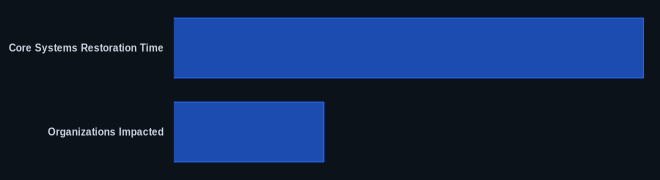
Data at a Glance
| Metric | Value | Source |
|---|---|---|
| Core Systems Restoration Time | 8 days | PRNewswire |
| Organizations Impacted | 1 | SecurityWeek |
| Known Ransomware Groups Identified | 0 | SecurityWeek |
| CVEs Associated | 0 | BleepingComputer |
| Data Exfiltration Confirmed | Yes | PRNewswire |
| Law Enforcement Notified | Yes | SecurityWeek |
The CVEDaily Take
West Pharma's quick action to shut down systems likely limited the damage, but the confirmed data exfiltration and global operational disruption show that even proactive measures can't stop all determined attackers. The company's statement about "mitigat[ing] the risk of dissemination" of exfiltrated data strongly implies a ransom demand for non-publication, which West Pharma has not confirmed paying. We see a trend of attackers prioritizing data theft before encryption, recognizing the value of that leverage even if decryption isn't paid. The absence of specific IOCs or the ransomware group's name from public disclosures makes it harder for other organizations to defend against similar tactics.
What specific technical controls do you have in place to prevent data exfiltration after initial network compromise?
FAQ
Q: What specific types of data were exfiltrated during the attack?
A: West Pharmaceutical Services has confirmed that data was exfiltrated from its systems, but the specific types of data affected have not been publicly disclosed as the investigation is ongoing.
Q: Has the ransomware group responsible for the attack been identified?
A: No, West Pharmaceutical Services has not publicly revealed the name of the ransomware group responsible for the attack.
Q: What was the initial access vector for the ransomware deployment?
A: The company has not disclosed the initial access vector that allowed the threat actors to compromise their systems.
