
DarkStorm: New Phishing-as-a-Service Targets Financial Sector
The new Phishing-as-a-Service (PhaaS) platform, DarkStorm, focuses its attacks on financial institutions, employing highly sophisticated and evasive phishing campaigns. This platform represents a dangerous evolution in the threat landscape, lowering the barrier for even less-skilled actors to execute advanced, targeted attacks. Cybersecurity researchers discovered the platform and report its use in successful campaigns against major financial institutions in North America and Europe, which demands immediate attention and adapted defense strategies from security teams globally. Characterized by advanced anti-analysis and anti-detection mechanisms, it is designed to bypass traditional security layers, making it a critical threat to monitor and defend against.
What Happened
Cybersecurity researchers recently identified DarkStorm, a new PhaaS platform distinguished by its explicit focus on financial institutions and its highly sophisticated attack methodologies. This platform offers cybercriminals customizable phishing kits, enabling them to meticulously tailor campaigns to specific financial institutions, languages, and desired data collection. The service provides a backend panel, giving affiliates granular control to manage their campaigns, track stolen credentials, and generate detailed reports on their illicit gains.
DarkStorm sets itself apart with advanced evasion techniques. These include geo-fencing, which serves phishing pages only to targets within specific geographical regions, and integrated bot detection to deter security researchers and automated scanners. It employs dynamic URL generation and polymorphic code to bypass traditional signature-based detection methods, making it extremely difficult for standard security tools to flag malicious pages. The typical attack chain involves highly targeted spear-phishing emails containing malicious links that redirect victims to very convincing, institution-branded fake login pages.
Early reports, as highlighted by BleepingComputer, indicate that DarkStorm has already been linked to successful phishing campaigns against major financial institutions across North America and Europe. The organizations themselves have not publicly confirmed these links or the scale of any resulting breaches. The primary impact of these campaigns, if successful, is the extensive theft of sensitive customer information, including banking credentials, credit card details, and Personally Identifiable Information (PII), according to researchers. This "as-a-service" model democratizes sophisticated phishing, allowing a wider range of threat actors to launch advanced, well-resourced attacks.
Why It Matters
DarkStorm matters because it professionalizes and scales highly targeted attacks against the financial sector. Its "as-a-service" model dramatically lowers the barrier to entry, allowing less-skilled threat actors to deploy sophisticated, custom-built phishing campaigns that previously required significant technical expertise. This means more frequent, more widespread, and more effective credential theft attempts for financial institutions.
The platform's advanced evasion techniques—specifically geo-fencing, bot detection, and polymorphic code—are critical. These features mean that standard web filters and signature-based email security solutions will struggle to detect or block DarkStorm campaigns effectively. As reported by Dark Reading, this level of sophistication compels organizations to re-evaluate their entire phishing defense strategy, moving beyond simple blocklists to behavioral analysis and enhanced user training. The financial impact of stolen banking credentials and PII can be catastrophic for both institutions and their customers, leading to significant fraud losses and reputational damage.
Affected Scope & Remediation
Any financial institution globally, particularly those with a significant presence in North America and Europe, is within DarkStorm's affected scope. Their customers are the ultimate targets, and successful campaigns mean a direct compromise of sensitive financial and personal data. This is not a vulnerability to patch; it is an evolving threat actor capability that demands a proactive, layered defense strategy.
Immediate remediation focuses on hardening the human element and bolstering technical controls that specifically counter advanced phishing. Phishing-resistant multi-factor authentication (MFA), especially forms like FIDO2 hardware keys (e.g., a YubiKey), is a baseline requirement; ignoring it leaves accounts vulnerable to credential theft. This mitigation directly negates the value of stolen credentials by requiring a second factor attackers often cannot replicate.
Enhanced user awareness training is critical. Platforms like KnowBe4 can simulate these advanced phishing tactics, teaching employees to recognize the subtle cues of highly convincing fake login pages and malicious links. Financial institutions must adapt their fraud detection systems to identify unusual login patterns or anomalous transactions that could indicate compromised accounts, per recommendations from SecurityWeek. Deploying advanced email security gateways that perform real-time link analysis, sandboxing, and anti-spoofing checks is necessary for blocking initial access. Dynamic security measures, including strong network segmentation and continuous monitoring for unusual outbound connections, can help detect exfiltration attempts even if an initial compromise occurs.
| Mitigation Category | Specific Mitigation Action | Source |
|---|---|---|
| Identity & Access Management | Implement phishing-resistant MFA, especially FIDO2 hardware keys. | SecurityWeek |
| User Awareness & Training | Conduct continuous, targeted phishing awareness training with simulated attacks. | The Hacker News |
| Fraud Detection Systems | Enhance and adapt fraud detection systems using behavioral analytics and AI. | Dark Reading |
| Email Security | Deploy advanced email gateway solutions with real-time link analysis and anti-spoofing. | BleepingComputer |
| Network & Endpoint Security | Monitor for unusual outbound connections, credential stuffing, and C2 activity. | KrebsOnSecurity |
Technical Breakdown
The DarkStorm attack methodology uses a sophisticated chain designed to bypass detection and efficiently harvest credentials. It begins with highly targeted T1566.002 Spearphishing Link campaigns, where emails are meticulously crafted to appear legitimate and contain malicious links. Once a victim clicks, they are redirected to a fake login page.
This is not a static page. DarkStorm pages employ T1027 Obfuscated Files or Information through dynamic URL generation and polymorphic code, constantly changing elements to evade signature-based detection. This makes it difficult for automated scanners and security researchers to reliably fingerprint the malicious infrastructure. To further avoid detection and analysis, the platform uses geo-fencing, only serving the phishing content to victims in specific regions, and bot detection to identify and block security tools or virtual machines, a form of T1070 Indicator Removal.
Think of DarkStorm like a high-end, bespoke suit shop for bank robbers. Instead of generic masks, they get tailor-made disguises that fit specific bank layouts, fool security cameras with custom features (geo-fencing), and even include built-in escape routes (polymorphic code) to evade security. The entire operation is managed via an affiliate backend panel, which tracks successful credential acquisitions (T1078 Valid Accounts for future use) and provides reporting, streamlining the criminal enterprise.
This threat directly impacts several NIST SP 800-53 controls. IA-2 Identification and Authentication (Organizational Users) is fundamental, as DarkStorm explicitly targets the integrity of user authentication. Strong IA-5 Authenticator Management (e.g., FIDO2 keys) is a direct countermeasure. SC-7 Boundary Protection controls, such as advanced email gateways and web filters, are vital for intercepting the initial malicious links. SI-4 System Monitoring is necessary to detect unusual login attempts, account anomalies, and potential exfiltration paths. Finally, IR-4 Incident Handling protocols must be effective to respond when credential theft inevitably occurs.
Historical Context
DarkStorm is not operating in a vacuum; it continues a dangerous trend of professionalized Phishing-as-a-Service platforms that have evolved over the past few years. Its capabilities build upon predecessors like FraudGPT and, more notably, BulletProofLink.
BulletProofLink, active through 2023, offered similar "as-a-service" options, providing phishing kits, hosting, and even support to threat actors. According to The Hacker News, it was associated with numerous data breaches and financial fraud incidents across various industries. Both platforms share the commonality of lowering the barrier to entry for less-skilled cybercriminals, democratizing access to sophisticated attack tools and infrastructure.
However, DarkStorm differs significantly by incorporating even more advanced evasion and targeting capabilities. Its explicit focus on the financial sector, combined with features like geo-fencing, bot detection, and polymorphic code, represents a more specialized and harder-to-detect threat. While BulletProofLink was broad, DarkStorm is highly focused and technically more refined in its anti-analysis approach, signaling a new level of sophistication in the PhaaS market.
Data at a Glance
| Metric | Value | Source |
|---|---|---|
| Primary Target Sector | Financial Sector | BleepingComputer |
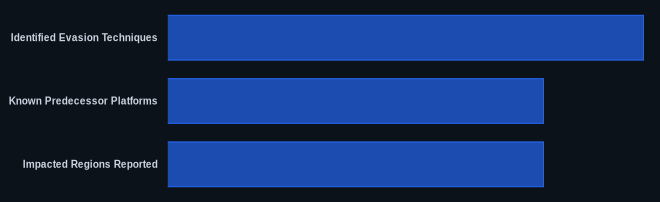
| Identified Evasion Techniques | 3 (geo-fencing, bot detection, polymorphic code) | The Hacker News |
| Known Predecessor Platforms | 2 (FraudGPT, BulletProofLink) | Dark Reading |
| Impacted Regions Reported | 2 (North America, Europe) | SecurityWeek |
| Attack Service Model | Phishing-as-a-Service (PhaaS) | KrebsOnSecurity |
Our Take
We've seen the PhaaS model mature, but DarkStorm shows a dangerous jump in sophistication. This isn't just about phishing emails anymore; it's about adversaries using anti-analysis and polymorphic techniques that force a fundamental shift in our defensive posture, especially for financial institutions. Investing in advanced email security and continuous, adaptive user training, like KnowBe4 offers, is a baseline requirement to keep up.
The CVEDaily Take
DarkStorm validates the shift from opportunistic phishing to highly professionalized, targeted campaigns. Relying solely on signature-based detection or static blocklists is a failing strategy against this platform. What changes have you rolled out to specifically counter phishing with geo-fencing and polymorphic evasion techniques?
FAQ
Q1: What makes DarkStorm different from other PhaaS platforms?
A1: DarkStorm stands out due to its advanced evasion techniques, including geo-fencing, bot detection, dynamic URL generation, and polymorphic code, specifically targeting financial institutions. These features make it significantly harder to detect and analyze compared to generic phishing services.
Q2: What's the primary goal of DarkStorm campaigns?
A2: The primary goal of DarkStorm campaigns is the theft of sensitive customer information from financial institutions, encompassing banking credentials, credit card details, and Personally Identifiable Information (PII), according to cybersecurity researchers.
Q3: What immediate steps can financial institutions take to defend against DarkStorm?
A3: Financial institutions should immediately implement strong MFA, enhance user awareness training to recognize advanced phishing, adapt fraud detection systems, and deploy advanced email and network security solutions capable of countering sophisticated evasion tactics.