On Wednesday, June 3, 2026, ICBC Financial Services, the US unit of the Industrial and Commercial Bank of China, suffered a ransomware attack that disrupted its systems. This incident reportedly impacted liquidity in the critical US Treasury market, drawing immediate attention from global financial regulators, including the US Treasury and the Securities and Exchange Commission (SEC). The attack demonstrates how cyberattacks on vital financial infrastructure can pose systemic risk.
What Happened
On Wednesday, June 3, 2026, ICBC Financial Services, based in New York, suffered a ransomware attack that crippled some of its systems, according to CNN. This US subsidiary of the Industrial and Commercial Bank of China (ICBC) was forced to conduct US Treasury trades manually due to the disruption, as reported by Reuters. Ransomware is a form of cyber extortion where attackers encrypt data or lock networks, then demand payment—often in cryptocurrency—for access restoration.
Bloomberg reported that ICBC Financial Services promptly reported the incident to law enforcement, initiating an investigation and recovery efforts. China's Foreign Ministry stated that the bank had completed emergency handling to minimize risk and potential losses, according to SecurityWeek. The systems of ICBC's head office in Beijing, its other domestic and overseas units, and the main ICBC New York Branch were not affected by this specific incident, containing the direct operational fallout to the US unit, BleepingComputer confirmed.
Why It Matters
The ICBC Financial Services ransomware attack matters significantly because Reuters reported it impacted liquidity in US Treasuries, potentially contributing to a brief market sell-off on Thursday, June 4, 2026. This is a financial market stability concern, not merely a corporate IT problem. As the largest lender globally by assets, ICBC's US operations are intertwined with crucial financial mechanisms, including the massive US Treasury market.
CNN confirmed the incident triggered rapid engagement from top-tier global financial regulators, specifically the US Treasury and the SEC, who are actively monitoring the situation and assessing its broader implications. This immediate regulatory attention underscores the attack's potential for systemic impact, demonstrating how a localized cyber incident can quickly ripple through interconnected global financial systems. This highlights the vulnerability of critical market infrastructure to cyber threats, demanding a re-evaluation of resilience strategies across the sector.
Affected Scope & Remediation
BleepingComputer confirmed the attack's scope as limited solely to ICBC Financial Services, the US-based subsidiary in New York. This suggests either a highly targeted initial access vector or effective network segmentation that prevented lateral movement into ICBC's broader global infrastructure. The main ICBC New York Branch and the bank's head office were explicitly unaffected, which is a critical distinction that prevented a far wider catastrophe.
For remediation, Bloomberg confirmed ICBC Financial Services successfully cleared US Treasury trades executed on Wednesday, June 3, 2026, and repurchase agreements financing trades done on Thursday, June 4, 2026. This quick recovery for core business functions indicates their incident response and business continuity plans, including immutable, tested backups, were effective under pressure. Financial sector organizations must review and strengthen their SC-7 Boundary Protection controls, ensuring rigorous network segmentation between critical systems and any external-facing or less-hardened environments.
Implementing immutable backups and swift recovery capabilities is non-negotiable for ransomware defense. Solutions like Veeam or Acronis can provide the necessary resilience to restore operations rapidly and bypass ransom demands entirely. Advanced endpoint detection and response (EDR) tools, such as CrowdStrike Falcon or SentinelOne, detect anomalous activity early, allowing security teams to interrupt the ransomware kill chain before encryption can occur. This proactive monitoring, aligning with SI-4 System Monitoring, is crucial for financial institutions constantly under attack. Incident handling playbooks, detailed under IR-4 Incident Handling, should be regularly drilled and updated, especially after incidents like this which highlight potential gaps in response.

Technical Breakdown
Ransomware attacks, like the one against ICBC Financial Services, typically follow a kill chain that exploits common vulnerabilities or misconfigurations. The initial compromise often comes through T1566.001 Spearphishing Attachment, where a malicious document or link tricks an employee into executing malware, or T1190 Exploit Public-Facing Application, targeting a vulnerable web server or VPN. An attacker finds an open window (phishing email) or an unlocked back door (unpatched internet-facing server) to gain entry.
Once inside, attackers often use T1003 OS Credential Dumping, extracting credentials like NTLM hashes from memory (e.g., LSASS) to elevate privileges or access other systems. They then use T1078 Valid Accounts for lateral movement, traversing the network through services like T1021.001 Remote Desktop Protocol or administrative shares. This allows them to spread their malicious foothold, identify high-value targets, and prepare for widespread impact. For example, if attackers obtain an NTLM hash for a domain admin account, they can often move freely across the domain, mapping out critical file shares and backup systems.
The final stage, T1486 Data Encrypted for Impact, involves deploying the ransomware payload to encrypt files across the network, making them inaccessible. Concurrently, attackers often perform T1490 Inhibit System Recovery tactics, such as deleting shadow copies or disabling backup software, to complicate recovery efforts and pressure the victim into paying. They do not just lock files; they actively try to burn the keys to spare copies. Adhering to IR-4 Incident Handling is critical here, ensuring swift and decisive action once an attack is detected, alongside SI-3 Malicious Code Protection to prevent initial infection and execution.
Historical Context
The ICBC Financial Services attack isn't an isolated event; it echoes previous incidents where ransomware disrupted critical services. In November 2023, SecurityWeek confirmed Trans-Northern Pipelines Inc. in Canada suffered a cyber breach attributed to the ALPHV/BlackCat ransomware group. ALPHV/BlackCat allegedly exfiltrated 183GB of documents, indicating a double extortion tactic common in modern ransomware campaigns, where data is stolen before encryption; the company has not confirmed this data exfiltration.
Similar to the ICBC incident, the Trans-Northern Pipelines attack targeted critical infrastructure, raising concerns about operational continuity and broader economic impact. The key difference lies in the reported ripple effect: while a pipeline disruption is severe, the ICBC attack's reported impact on US Treasury market liquidity hints at a more profound, systemic financial concern. The ICBC case also did not immediately involve a named threat group or claims of data exfiltration, focusing instead on system disruption and financial market stability.
Data at a Glance
| Metric | Value | Source |
|---|---|---|
| Attack Date | June 3, 2026 | CNN |
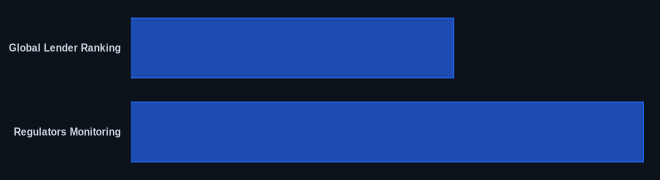
| Global Lender Ranking | #1 by assets | SecurityWeek |
| Regulators Monitoring | 2 (US Treasury, SEC) | Reuters |
| Market Impact Reported | Yes, US Treasury liquidity | Bloomberg |
| Cleared Trades Post-Attack | Yes, for Wed/Thurs | BleepingComputer |
Our Take
We observe that even the largest financial players are not immune to basic ransomware. The ICBC Financial Services incident, while confirmed to be contained to a US subsidiary, still reportedly touched the US Treasury market. That ripple effect is the real alarm bell here, demonstrating how a single incident, even if quickly remediated internally, can move beyond a specific organization's perimeters and create systemic concerns. This highlights the precarious balance of interconnected global finance and the urgent need for foundational cybersecurity resilience, not just advanced threat hunting.
The CVEDaily Take
This incident demonstrates the entire financial sector's shared vulnerability and the potential impact on global market stability. Regulators are watching, and so should every security engineer responsible for critical systems. We question whether the containment to a single subsidiary truly mitigated all broader systemic risks, given the reported impact on US Treasury liquidity.
What immediate changes are you implementing to your network segmentation and incident response playbooks following this reported impact on US Treasury liquidity?
FAQ
Q1: What was the primary reported impact of the ICBC ransomware attack?
A1: The primary reported impact was a disruption to ICBC Financial Services' systems, which reportedly also affected liquidity in the US Treasury market.
Q2: Was ICBC's global operation or main New York branch affected by this incident?
A2: No, the attack was confirmed to be limited to ICBC Financial Services, the US unit. ICBC's head office in Beijing, other global units, and the main ICBC New York Branch were not affected.
Q3: Which regulatory bodies are involved in monitoring the ICBC incident?
A3: Global financial regulators, including the US Treasury and the Securities and Exchange Commission (SEC), are actively monitoring the situation and assessing the fallout.