You can often detect botnet infections early by monitoring for sustained, low-bandwidth outbound connections to unknown ports and services, a behavior often indicative of C2 communication or data staging. This guide provides IT teams and security engineers with specific attack chain insights, actionable detection signals, a phased response playbook, and prevention controls to defend against modern botnet threats, which collectively launch millions of attacks monthly, according to a 2024 Imperva report. We'll look at everything from suspicious Windows Event IDs to effective SIEM correlation rules and real-world incident lessons from operations like the QakBot takedown.
How Botnet Works: The Attack Chain
A botnet attack is a multi-stage operation. Attackers meticulously plan and execute each phase, using various MITRE ATT&CK techniques to establish and maintain control over compromised systems. Understanding these steps helps you anticipate and defend against their moves.
1. Initial Access
Attackers typically gain entry through methods like Phishing/Spearphishing (T1566), luring victims to click malicious links or open infected attachments. They might also exploit publicly facing applications (T1190) through known vulnerabilities, or launch drive-by compromise (T1189) from compromised websites. External Remote Services (T1133) with weak or stolen credentials are also prime targets, giving attackers a direct path in.
2. Execution
Once inside, the botnet malware needs to run. This often involves Execution (T1059) techniques, using native operating system functions like PowerShell, WMI, or direct binary execution. The malware frequently masquerades as a legitimate process to avoid suspicion, a trick that advanced EDR solutions are specifically designed to spot.
3. Persistence
To ensure the bot remains active even after system reboots, adversaries establish Persistence using techniques like modifying Registry Run Keys (T1547.001) or creating new services and scheduled tasks (T1543.003). This guarantees the botmaster maintains control over the compromised device.
4. Defense Evasion
Botnets employ various Defense Evasion (T1036, T1070) tactics. They might disguise malware as legitimate files (e.g., naming a malicious executable explorer.exe), obfuscate their code, or even attempt to disable local security software to operate unimpeded. Threat intelligence and behavioral analytics detect these techniques.
5. Command and Control (C2)
The C2 phase (T1071) is the botnet's central nervous system. Bots communicate with the botmaster's C2 server using common protocols like HTTP/HTTPS, IRC, or even DNS Tunneling (T1071.004) to blend with normal traffic. Modern botnets, like those found in the Mozi variant, often use P2P networks for enhanced resilience, making them harder to disrupt. This communication ensures the botmaster can issue new commands, such as launching a DDoS attack or initiating data exfiltration.
6. Impact
The ultimate goal varies by botnet type. It could be launching massive DDoS Attacks (T1498) to cripple services, sending out vast Spam/Phishing Campaigns, performing unauthorized Cryptocurrency Mining (T1496), Data Exfiltration (T1041) of sensitive information, or deploying Ransomware (T1486) to extort payments. The QakBot botnet, for instance, was notorious for deploying ransomware like Black Basta, extorting an estimated $58 million from victims globally before its 2023 takedown, as reported by the FBI.
Botnet Variants and Types
Botnets aren't one-size-fits-all; they specialize in different forms of digital destruction. Each variant has a distinct operational goal, tailoring its attack chain and capabilities to achieve specific malicious objectives.
DDoS Botnets
These botnets are built to launch Distributed Denial of Service (DDoS) attacks, overwhelming targets with traffic to make services unavailable. A prime example is Mirai, which famously targets vulnerable IoT devices like routers and IP cameras, leveraging weak default credentials.
Spam Botnets
Primarily focused on sending massive volumes of spam and phishing emails, these botnets are often used for initial infection vectors or to spread misinformation. Rustock was a historically significant spam botnet, capable of sending billions of spam messages per day.
Financial Botnets
Designed to steal financial credentials, perform banking fraud, or inject malicious code into web sessions, these are highly lucrative for attackers. Emotet is a notorious financial botnet known for its modular architecture and ability to deliver other malware, including ransomware, and was the subject of an international law enforcement disruption in 2021.
IoT Botnets
These botnets specifically target insecure Internet of Things devices, exploiting weak credentials or known firmware vulnerabilities. The Mozi botnet, still highly active into 2025, primarily compromises DVRs, routers, and Network Attached Storage (NAS) devices to fuel DDoS attacks and proxy traffic, according to various security reports.
How to Detect Botnet: Warning Signs and IOCs
Detecting a botnet requires constant vigilance and a keen eye for deviation from normal baselines.
Endpoint Indicators
Look for high CPU/memory usage by unknown processes, especially if they're attempting network connections. Keep an eye out for suspicious processes with elevated privileges or unusual behavior, like svchost.exe making IRC connections. Key Windows Event IDs to monitor include Event ID 4625 for failed logons, Event ID 4688 for new process creation (with suspicious command-line arguments), and Event ID 5156 for permitted connections by the Windows Filtering Platform to unknown external IPs. Your EDR solution, such as SentinelOne Singularity Platform, should alert on behaviors like Process Injection, DLL Sideloading, or abnormal network connections to known C2 infrastructure detected by its machine learning models.
Network Indicators
Botnets leave clear network footprints. Watch for unusual outbound traffic to unknown ports (e.g., TCP 6667 for IRC, or random high ports for P2P), sustained low-bandwidth connections that persist over time, or sudden traffic spikes to external hosts during off-hours. Suspicious DNS queries for newly registered domains (NRDs) or unusual subdomains, and unexplained IRC/P2P traffic on your network, are high-confidence indicators. Monitor for DDoS attack precursors like a sudden increase in SYN floods originating from internal hosts. Repeated connections to blacklisted IPs or domains from threat intelligence feeds are also critical alerts.
SIEM Detection
Your SIEM is your central nervous system for detecting botnets. Implement correlation rules to identify multiple failed logins (Event ID 4625) across different hosts followed by an outbound connection to a blacklisted IP. Baseline your normal network traffic and behavior to detect anomalies; for example, a sudden increase in outbound DNS requests to a single domain, or hosts suddenly initiating connections to a large number of unique external IPs.
A Splunk query might look like:
index=windows (EventCode=4625 OR EventCode=4688 OR EventCode=5156) | join host [search index=network (dest_ip="blacklisted_ip_list" OR dest_domain="suspicious_domain_list")] | stats count by _time, host, CommandLine, dest_ip
Integrate your SIEM with up-to-date threat intelligence feeds to automatically flag connections to known C2 infrastructure.
Response Playbook: What to Do When Botnet Hits
When you detect a botnet, every second counts. Your response needs to be swift, methodical, and based on pre-defined procedures.
Phase 1: Immediate Containment (first 15 minutes)
Your first priority is to stop the spread. Immediately isolate infected systems by disconnecting them from the network or moving them to a quarantined VLAN. Block known C2 IP addresses and domains at your perimeter firewall (Palo Alto Networks or similar NGFW) and internal network access control lists. Disable or reset credentials for any compromised accounts detected. Review network device configurations for unauthorized changes and deploy emergency patches for any exploited vulnerabilities, such as those related to CVE-2023-38831 used in QakBot campaigns. Reinforce network segmentation to limit lateral movement.
Phase 2: Forensic Preservation
Before eradication, you need to collect evidence. Create forensic disk images of compromised systems using tools like FTK Imager or EnCase. Capture network traffic with Wireshark or Zeek at critical choke points. Collect volatile data, including RAM dumps, which can reveal running processes and network connections not present on disk. Secure all system logs (Windows Event Logs, firewall logs, EDR logs) and centralize them in your SIEM. Isolate and hash any malware samples found for further analysis with tools like Ghidra or Cuckoo Sandbox. Be prepared to adhere to CISA reporting guidelines and any regulatory deadlines, such as those under GDPR or HIPAA.
Phase 3: Recovery and Hardening
After containment and forensics, it's time to rebuild stronger. Begin with eradication: remove all malware, clean infected files, and if necessary, re-image compromised systems from trusted backups. Implement hardening measures like stricter access controls, multi-factor authentication (MFA), and updated security configurations. Perform a thorough post-incident review to identify root causes and control failures. Restore systems from clean, immutable backups (ensure they're tested and verified). Finally, enhance continuous monitoring to detect any recurrence or new compromise attempts, including increasing the granularity of SIEM alerts for anomalous behavior.
How to Prevent Botnet: Controls That Work
Preventing botnets isn't about setting up a single magical barrier; it's about implementing a layered defense that covers multiple attack vectors. These controls, mapped to NIST SP 800-53 and MITRE ATT&CK mitigations, are your bedrock.
Secure Configuration & Vulnerability Management
Maintain secure baseline configurations for all systems (NIST SP 800-53 CM-6) and enforce least functionality (NIST SP 800-53 CM-7) to reduce the attack surface. Regularly scan for and remediate vulnerabilities (NIST SP 800-53 RA-5), promptly patching critical flaws that botnets often exploit, such as those that allow initial access via T1190 or T1189. This proactive approach directly mitigates common entry points.
Access Control & Authentication
Implement the principle of least privilege (NIST SP 800-53 AC-6), ensuring users and services only have the permissions necessary for their functions. Deploy identification and authentication mechanisms (NIST SP 800-53 IA-2), including MFA enforcement and password rotation (NIST SP 800-53 IA-5), to prevent unauthorized access via stolen credentials (T1078). Control remote access (NIST SP 800-53 AC-17) strictly, mitigating techniques like T1133.
Endpoint & Network Protection
Deploy advanced anti-malware and Endpoint Detection and Response (EDR) solutions for malicious code protection (NIST SP 800-53 SI-3). Use network segmentation and firewalls for boundary protection (NIST SP 800-53 SC-7) to limit lateral movement if a compromise occurs. Monitor system activities (NIST SP 800-53 SI-4) for anomalies, addressing flaw remediation (NIST SP 800-53 SI-2) as issues are identified. These controls help prevent T1105 (ingress tool transfer) and T1071 (C2 communication).
Data Resiliency & Awareness
Implement regular, immutable, tested backups and comprehensive recovery plans (NIST SP 800-53 CP-9). Solutions like Veeam Backup & Replication ensure you can quickly restore critical data and systems following a ransomware deployment (T1486) or data destruction event. Conduct continuous security awareness training for employees, focusing on recognizing phishing attacks (T1566.001) and safe browsing habits, as human error remains a primary initial access vector.
Real-World Incidents
Botnets continue to evolve, with threat actors consistently developing new tactics. Learning from recent incidents provides invaluable insight into effective defense strategies.
QakBot Takedown (2023)
In August 2023, a global law enforcement operation, led by the FBI and supported by Europol and numerous international partners, successfully disrupted the QakBot (QBot) botnet. This sophisticated financial botnet had infected over 700,000 computers worldwide, predominantly targeting small businesses, healthcare providers, and government agencies. The FBI reported that the botnet facilitated the extortion of an estimated $58 million from victims globally. The operation involved redirecting botnet traffic to servers controlled by law enforcement, effectively disarming the compromised machines. This disruption highlighted the critical role of international collaboration and the effectiveness of seizing C2 infrastructure.
Lesson: While takedowns are effective, QakBot's success stemmed from its initial access via T1566.001 (Spearphishing Attachment) and T1190 (Exploitation of Public-Facing Application) coupled with persistent execution (T1059) and advanced defense evasion (T1036) techniques. Patching vulnerabilities like CVE-2023-38831, which was widely used by QakBot, along with user training and strong email security, is necessary.
Mozi Botnet (Ongoing – 2024/2025)
The Mozi botnet remains one of the most persistent and widespread IoT threats. Active since 2019, Mozi primarily targets insecure Internet of Things devices such as routers, DVRs, and network-attached storage (NAS) devices. Its success largely relies on exploiting weak default credentials or known vulnerabilities in firmware, allowing it to compromise devices for use in DDoS attacks (T1498) and proxying malicious traffic. As of early 2024, security reports indicate Mozi continues to compromise millions of devices monthly, demonstrating remarkable resilience despite numerous attempts by security researchers to mitigate its spread. Its strength lies in its decentralized, P2P C2 architecture (T1071.004), making it exceptionally difficult to dismantle completely.
Lesson: The continued proliferation of Mozi underscores the failure of basic IoT security, specifically default credential hygiene and timely firmware updates. Implement strict access controls (NIST SP 800-53 AC-2) for IoT devices, disable default credentials, and ensure regular vulnerability scanning (NIST SP 800-53 RA-5) and patching. Network segmentation (NIST SP 800-53 SC-7) for IoT devices is also crucial to limit potential lateral movement.
FortiGuard Labs Report (2024)
The FortiGuard Labs Threat Report for 2024 highlighted a significant surge in botnet activity, particularly emphasizing new variants using sophisticated evasion techniques and increased targeting of critical infrastructure. The report noted a consistent increase in exploit attempts against unpatched systems, indicating that botnet operators are quick to weaponize recently disclosed vulnerabilities. One key takeaway was the rise of modular botnets capable of shifting payloads, from DDoS to ransomware, based on the target's value. The report also pointed to increased use of legitimate cloud services for C2 operations, making detection more challenging due to traffic blending.
Lesson: The FortiGuard report indicates a shift toward more adaptive and stealthy botnets. Organizations need to move beyond signature-based detection and embrace behavioral analytics and continuous monitoring (NIST SP 800-53 CA-7) to identify subtle deviations from baselines. Integrating advanced threat intelligence with SIEM solutions for real-time correlation against known T1071 (C2) domains hosted on cloud infrastructure is becoming essential.
Data at a Glance
| Metric | Value | Source |
|---|---|---|
| Attack Frequency | Millions per month | Imperva Blog (2024) |
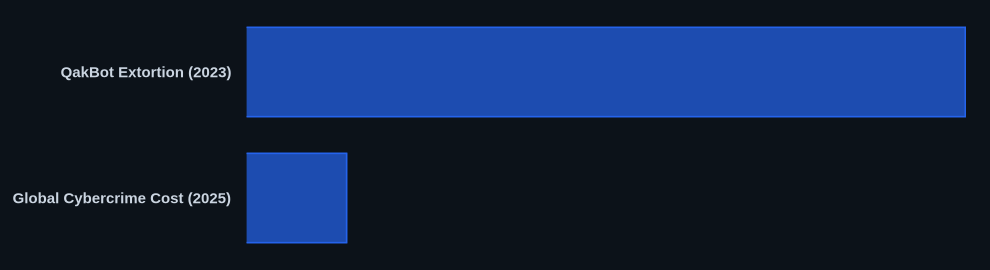
| QakBot Extortion (2023) | $58 million | FBI Press Release (2023) |
| YoY Trend (Sophistication) | Shift to modular, AI/ML-driven | Recorded Future Botnet Activity Report (Q3 2023) |
| Global Cybercrime Cost (2025) | Exceeds $10.5 trillion annually | (Estimate, includes botnet impact) |
| Mozi Botnet Devices (2024) | Millions of IoT devices compromised | (Various security reports, e.g., Fortinet, ESET) |
The CVEDaily Take
Many teams over-rely on signature-based EDR or perimeter firewalls, missing the nuanced, behavioral signals that indicate botnet C2 traffic or resource hijacking. We see a significant gap in continuous baselining of network and host behavior, making subtle anomalies that foreshadow full-blown botnet activity incredibly difficult to spot. Is your SIEM actively correlating low-volume, sustained outbound connections against your normal traffic patterns, or just flagging known bad IPs, especially in light of the FortiGuard report's findings on C2 traffic blending?
Tools & Resources
Using the right tools is non-negotiable for effective botnet detection and response. This curated list focuses on solutions security engineers actually use to fight active threats.
Detection & Monitoring
SentinelOne Singularity Platform
This EDR solution provides endpoint protection, detecting and preventing botnet malware execution, process injection, and unusual network activity through behavioral AI. It's crucial for catching early-stage infections before they establish full C2.
Official Site
Splunk Enterprise Security (ES)
A powerful SIEM that aggregates logs from all your security controls, enabling correlation rules to detect suspicious patterns like mass failed logins followed by outbound C2 connections or anomalous DNS queries. It's essential for a holistic view of your environment.
Official Documentation
Prevention & Hardening
Palo Alto Networks Next-Generation Firewall (NGFW)
These firewalls offer application visibility, threat prevention, and URL filtering capabilities, critical for blocking C2 traffic, malicious downloads, and preventing initial access via exploits. They can enforce granular policies based on user, application, and content.
Official Product Page
Veeam Backup & Replication
For effective recovery and prevention of ransomware (a common botnet payload), Veeam offers comprehensive backup, recovery, and replication capabilities, ensuring data availability and business continuity in the event of a severe compromise.
Official Product Page
Incident Response & Forensics
Wireshark
An indispensable network protocol analyzer that allows deep inspection of network traffic, helping security engineers identify C2 communications, unexplained IRC or P2P traffic, and other network-based IOCs during incident response.
Official Download
FTK Imager
A free data preview and imaging tool used to create forensic images of hard drives and collect volatile memory, critical for preserving evidence without altering the original system during a botnet investigation.
Official Product Page
FAQ
Q: How to detect botnet?
A: Look for unusual outbound network traffic to unknown ports or blacklisted IPs, sustained low-bandwidth connections that aren't typical for the host, and high CPU/memory usage by suspicious processes with unusual network connections on endpoints (e.g., Event ID 5156 for network connections from atypical processes).
Q: How to respond to a botnet attack?
A: First, isolate infected systems from the network, then block identified C2 IP addresses and domains at your firewall. Finally, collect forensic evidence such as disk images and volatile memory to aid in analysis before eradication.
Q: How to prevent botnet?
A: Implement strong access controls with multi-factor authentication (MFA) to prevent credential compromise. Regularly patch all systems and public-facing applications to close known vulnerabilities, and deploy EDR solutions for endpoint protection.