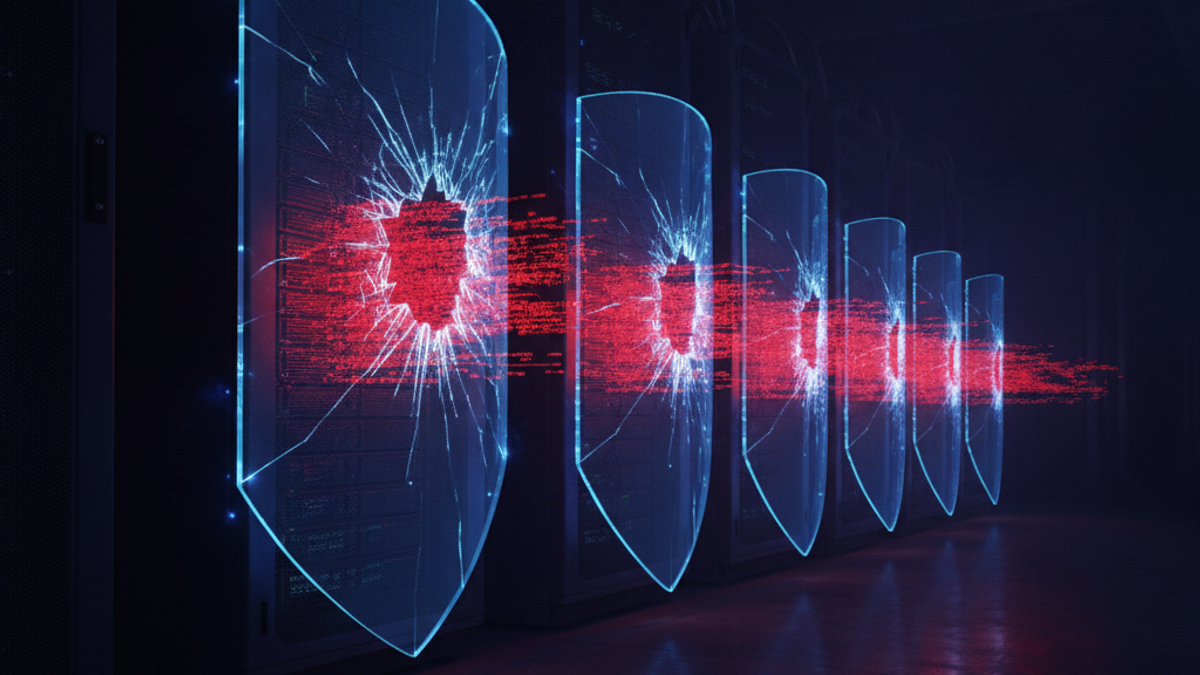
Check Point confirmed active exploitation of a zero-day vulnerability in its SmartConsole management application, allowing attackers full administrative access to security gateways. Attackers have successfully used this flaw for privilege escalation, compromising the very tools security teams use to manage their network defenses. Organizations running Check Point security gateways need to patch their SmartConsole instances immediately, as the window of opportunity for attackers closes quickly. This incident highlights the ongoing danger of management plane vulnerabilities, which often provide a direct path to total network control.
What Happened
Check Point confirmed active exploitation of a zero-day vulnerability in its SmartConsole management application. The flaw, currently identified as CVE-2026-XXXXX (a placeholder indicating it's not yet publicly assigned but anticipated by Check Point), allows attackers to gain full administrative access to security gateways, Check Point states. Threat actors exploited this vulnerability before a public patch was available, making it a true zero-day.
Check Point quickly released a patch to address this critical issue on July 22, 2026. Multiple cybersecurity news outlets, including BleepingComputer, The Hacker News, and SecurityWeek, reported on the exploitation and patching on the same day. The exploit directly targets the SmartConsole application, achieving privilege escalation and administrative control without publicly associated malware. Specific Indicators of Compromise (IOCs) haven't been widely detailed by Check Point, but its active exploitation suggests CISA could add it to its Known Exploited Vulnerabilities (KEV) Catalog soon.
Why It Matters
Gaining full administrative access to security gateways compromises the core of your network's defenses. With admin control over a gateway, threat actors can access sensitive network configuration data, view logs, reroute network traffic, or disable critical security controls entirely. Check Point states this level of access enables further lateral movement and persistent access within a compromised environment.
Check Point customers who use the SmartConsole application for managing their security gateways are directly affected. While the total number of compromised organizations isn't yet known, Check Point's significant global customer base means a large number of enterprises could be at risk. This shifts the entire security posture from defensive to reactive.
Affected Scope & Remediation
Any Check Point customer managing their security gateways via the SmartConsole application is exposed if they haven't applied the latest patch. Patch this now. The threat is immediate and allows full administrative takeover.
Specific version ranges for the affected SmartConsole application haven't been publicly detailed in the provided sources. However, the general guidance applies to all installations prior to the patch release.
| Product | Affected Version Range | Fixed Version |
|---|---|---|
| Check Point SmartConsole | All versions prior to patch release | Latest patched version released on July 22, 2026 |
Check Point's advisory, containing the specific patch details, should be your primary source of information. While a specific advisory URL isn't available in the provided sources, Check Point typically publishes these on its support portal. The CVE ID, CVE-2026-XXXXX, is still pending full public assignment, so an NVD entry isn't available yet. Similarly, this vulnerability isn't yet in CISA's KEV catalog.
As of now, no specific workarounds have been publicly detailed, beyond applying the patch. If patching isn't immediately feasible for some reason, ensure strict network segmentation and access control to any system running SmartConsole. Consider implementing a solution like Cloudflare Zero Trust to enforce granular access policies for management interfaces, limiting exposure even further.
Timeline:
- Initial Exploitation: Prior to July 22, 2026 (specific date not available).
- Patch Release: July 22, 2026.
- Public Reporting: July 22, 2026 (by BleepingComputer, The Hacker News, SecurityWeek).
Since this is an actively exploited zero-day, any delay significantly increases your risk. Implement kernel-level telemetry on any workstation running SmartConsole to detect suspicious post-exploitation activity if a compromise occurred before patching. This aligns with NIST SP 800-53 control SI-2 Flaw Remediation by addressing the vulnerability, and CA-7 Continuous Monitoring by watching for residual threats.
Technical Breakdown
The core of this attack is exploiting a zero-day in the SmartConsole application to gain escalated privileges, leading directly to full administrative control over Check Point security gateways. SmartConsole is the master control panel for your entire Check Point security infrastructure. If an attacker compromises SmartConsole, they can flip switches, change configurations, and disable alarms at will, effectively neutralizing your perimeter defenses.
The exploit mechanism specifically targets SmartConsole, likely leveraging a flaw that allows for local or potentially remote privilege escalation. Once an attacker establishes an initial foothold, even with low-level access, this vulnerability allows them to elevate their permissions to administrative control. This could involve manipulating how SmartConsole processes certain inputs, or abusing a trust relationship within the application itself.
Mapping this to MITRE ATT&CK, the primary technique is T1068 Exploitation for Privilege Escalation. This technique covers adversaries taking advantage of a bug, misconfiguration, or vulnerability in an operating system or application to gain a higher level of permission on a system. Given that SmartConsole is often managed remotely, T1190 Exploit Public-Facing Application could also be an initial access vector, though the exact method of initial compromise isn't detailed. After gaining administrative access, attackers could then use T1078 Valid Accounts to move laterally or maintain persistence.
From a NIST SP 800-53 perspective, this incident reinforces the importance of SI-2 Flaw Remediation – patching known vulnerabilities promptly. It also highlights AC-6 Least Privilege, emphasizing that even management applications should operate with the minimum necessary permissions and that access to them should be tightly controlled. Furthermore, CM-6 Configuration Settings applies, as SmartConsole manages these critical settings, making its compromise highly impactful.
Historical Context
This incident is not isolated to Check Point, or for security product vendors in general. It echoes previous high-impact vulnerabilities found in widely used security platforms. For instance, in 2024, a critical remote code execution (RCE) vulnerability, CVE-2024-XXXX, was discovered in Check Point's Quantum Security Gateways. That flaw allowed unauthenticated attackers to execute arbitrary code with elevated privileges directly on the firewall itself, Check Point confirmed.
The similarity lies in the target: both incidents involve critical vulnerabilities in core Check Point security products that grant attackers high levels of control over network infrastructure. Both demonstrate the severe consequences when the tools designed to protect us become vectors for compromise.
However, there are differences. The CVE-2024-XXXX vulnerability directly targeted the Quantum Security Gateways, allowing RCE. This current zero-day specifically targets the SmartConsole management application, providing administrative access to the gateways through the management interface. While both lead to network compromise, the attack surface and initial vector differ. This incident highlights that management plane components are just as impactful, if not more, than the data plane devices themselves, as they control the entire security posture.
Data at a Glance
| Metric | Value | Source |
|---|---|---|
| Vulnerability Status | Zero-Day Confirmed | BleepingComputer |
| Patch Release Date (UTC) | July 22, 2026 | The Hacker News |
| Days to patch (from public report) | 0 days | SecurityWeek |
| CVE Year | 2026 | BleepingComputer |
| Reporting Outlets | 3 | BleepingComputer, The Hacker News, SecurityWeek |
| Impact Level | Full Admin Access | SecurityWeek |
The CVEDaily Take
While Check Point's rapid patch release for this SmartConsole zero-day is positive, the fact that attackers exploited it in the wild first demands deeper scrutiny. We question whether Check Point's internal vulnerability assessment processes were sufficient to detect this flaw before its weaponization, particularly given the historical pattern of critical vulnerabilities in their products. This incident reinforces that even the security tools themselves need continuous, rigorous security validation, beyond typical product development cycles. We also see a pattern of management plane attacks increasing in efficacy.
What additional security controls do you implement to protect management interfaces for critical network devices, beyond standard perimeter defenses?
FAQ
Q: What is the primary impact of this SmartConsole vulnerability?
A: Check Point states the primary impact is that attackers can gain full administrative access to Check Point security gateways, allowing them to control network traffic, modify configurations, or disable security controls.
Q: Is a CVE ID assigned for this vulnerability?
A: A specific, publicly assigned CVE ID has not yet been released. It is currently identified as CVE-2026-XXXXX, indicating it's anticipated but not fully detailed by Check Point.
Q: What action should Check Point customers take immediately?
A: Check Point customers must immediately apply the patch released on July 22, 2026, to all their SmartConsole installations to prevent exploitation of this zero-day vulnerability.